
Underground & HiddenCincinnati Subwayabandoned subwayCincinnati history
Cincinnati Subway, Ohio
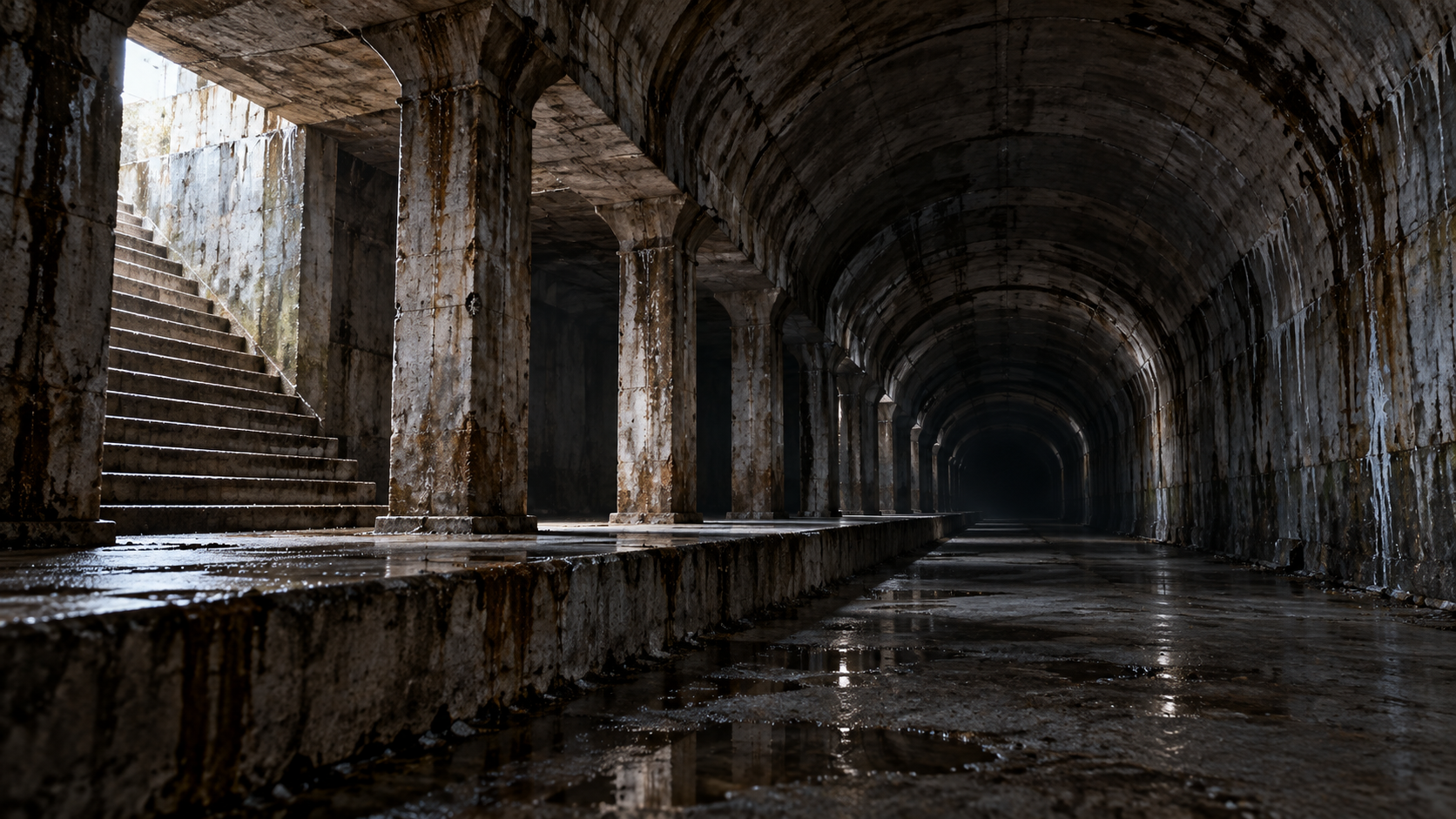
Beneath Cincinnati's Central Parkway lies about two miles of subway tunnel dug in the 1920s. The money ran out, no tracks were laid, and no train ever ran.
Every claim sourced
22 claims · 22 sources
0 disagreements logged
7 editorial corrections
Last checked Oct 6, 2026
The story
The numbered claim log below connects facts in this story to their sources.
For nearly a century, the Miami and Erie Canal cut through Cincinnati, dividing the Over-the-Rhine neighborhood from downtown. By the early 1900s, the canal was obsolete, and the city had a bold idea: drain it, and use the empty canal bed for a subway. In 1916, voters approved a $6 million bond issue, by a 6-to-1 margin, to build a rapid transit loop of about 16 miles around the city. The subway section would run in the old canal bed, and a new boulevard, Central Parkway, would be built on top. Then World War I intervened. Lawsuits and the war delayed the work, and while the city waited, construction costs soared. On January 28, 1920, the first steam shovel finally bit into the canal bed at Walnut Street. Crews built the main subway tunnel in four contracts between 1920 and 1923, about two miles long, with underground stations at Race Street, Liberty Street and Brighton. They also graded miles of above-ground route and built short suburban tunnels, bridges and several surface stations. By 1925, the $6 million was gone. The tunnels were dug, but there was no track, no power system, no finished stations and no subway cars. In October 1928, Central Parkway opened on top of the empty tubes, and that same year, the subway project was indefinitely shelved. Over the decades, the city considered reviving it several times, but every attempt to put the tunnels into service failed. In the 1950s, much of the unfinished above-ground route was taken for the construction of Interstate 75, and its surface stations were demolished. The tunnels themselves survived. Cincinnati-Transit.net describes them as the largest abandoned subway tunnel in the United States. They've carried utility lines, and the city still inspects them. The Race Street station, the largest in the system, still sits beneath the median of Central Parkway, built for three tracks that were never laid.
Last corrected: Oct 6, 2026.
Grew up near here?
Get the free Ohio guide: every Hidden Current place in the region, with what you can still see and how to get there.
State guides are coming soon. Email signup is not available yet.
Watch the short documentary
Cincinnati Subway, Ohio
Claim log
| # | Claim | Sources | Status |
|---|---|---|---|
| 1 | Brighton Place station is at Brighton Place and Central Parkway, at 39°07′19″N 84°31′55″W, owned by the City of Cincinnati |
| Sourced |
| 2 | Beyond Brighton Place, three above-ground stations were built but demolished when Interstate 75 was built |
| Sourced |
| 3 | Race Street station is at Race Street and West Central Parkway, underneath a median strip |
| Sourced |
| 4 | Race Street is the largest station in the system and the only one with a central platform and three tracks |
| Sourced |
| 5 | The Cincinnati Subway project was indefinitely canceled in 1928 |
| Sourced |
| 6 | From 1825 to 1920, the Miami and Erie Canal divided Over-the-Rhine from downtown |
| Sourced |
| 7 | The 1916 bond was supposed to fund a 16-mile subway system |
| Sourced |
| 8 | Various attempts to use the tunnels for mass transit have been unsuccessful |
| Sourced |
| 9 | By a 6-1 margin, Cincinnatians supported a $6,000,000 bond issue in 1916 |
| Sourced |
| 10 | Lawsuits after the war delayed construction until January 1920 |
| Sourced |
| 11 | Construction proceeded in phases until 1925, when the $6 million was exhausted; a two mile subway tunnel, three short suburban tunnels, and seven miles of above-ground grading were completed |
| Sourced |
| 12 | Underground stations were built at Race St., Liberty St., Brighton's Corner, and set-backs for another at Linn St. |
| Sourced |
| 13 | Cincinnati is the site of the country's largest abandoned subway tunnel |
| Sourced |
| 14 | The main subway tunnel was built in four contracts between 1920 and 1923 |
| Sourced |
| 15 | On January 28, 1920, the first steam shovel of ground was lifted from the canal at Walnut Street |
| Sourced |
| 16 | A little more than two miles of unused subway tunnel lie beneath the streets of Cincinnati |
| Sourced |
| 17 | In October 1928, Central Parkway was opened on top of the old subway tubes |
| Sourced |
| 18 | Cincinnati Museum Center sponsored sold-out subway tours until 2015; officials cite a lack of utilities and limited entrances and exits |
| Sourced |
| 19 | Stations exist at Race and Liberty streets and at Brighton Place; a planned fourth at Linn Street wasn't built |
| Sourced |
| 20 | The infrastructure is still inspected and maintained by the city |
| Sourced |
| 21 | The unfinished subway right-of-way was used for freeway construction in the 1950s |
| Sourced |
| 22 | Cincinnati installed a major water main and communications cables through portions of the abandoned subway |
| Sourced |
Disagreements logged
No approved disagreements are logged on this page yet.
Submit a disagreement
Disagree with a fact in this story? Submit a source-backed note for editorial review. It stays private until approved and does not automatically become a correction.
Sources
- Wikipedia
- cincinnati-transit.net
- City of Cincinnati
- Cincinnati Magazine
- metro-cincinnati.info
- x.com
Corrections
| # | Correction | Sources |
|---|---|---|
| 1 | The tunnel is a little more than two miles long, not nearly two miles |
|
| 2 | The tunnels never carried a train, but they are not entirely unused; the city inspects and maintains them |
|
| 3 | Portions of the tunnels have carried a water main and communications cables |
|
| 4 | Three underground stations were completed; a planned fourth at Linn Street was not built |
|
| 5 | Some sources count four subway stations |
|
| 6 | The main tunnel was finished by early 1923; construction continued on other parts of the system until funds ran out in 1925 |
|
| 7 | Public tours of the tunnels were reported to have ended in 2015 |
|
More Underground & Hidden places
- The Military Base Buried Beneath The Ice
- Cold War Underground Missile Silo, Arizona Desert
- Point Lay DEW Line: The Arctic Radar That Watched for Soviet Bombers
- SubTropolis: The Business City Hidden Under Kansas City
- Raven Rock: The Underground Pentagon Inside a Pennsylvania Mountain
- Wieliczka: The Cathedral Carved From Salt