
Underground & HiddenDistant Early Warning Lineradar stationCold War
Point Lay DEW Line: The Arctic Radar That Watched for Soviet Bombers, Alaska
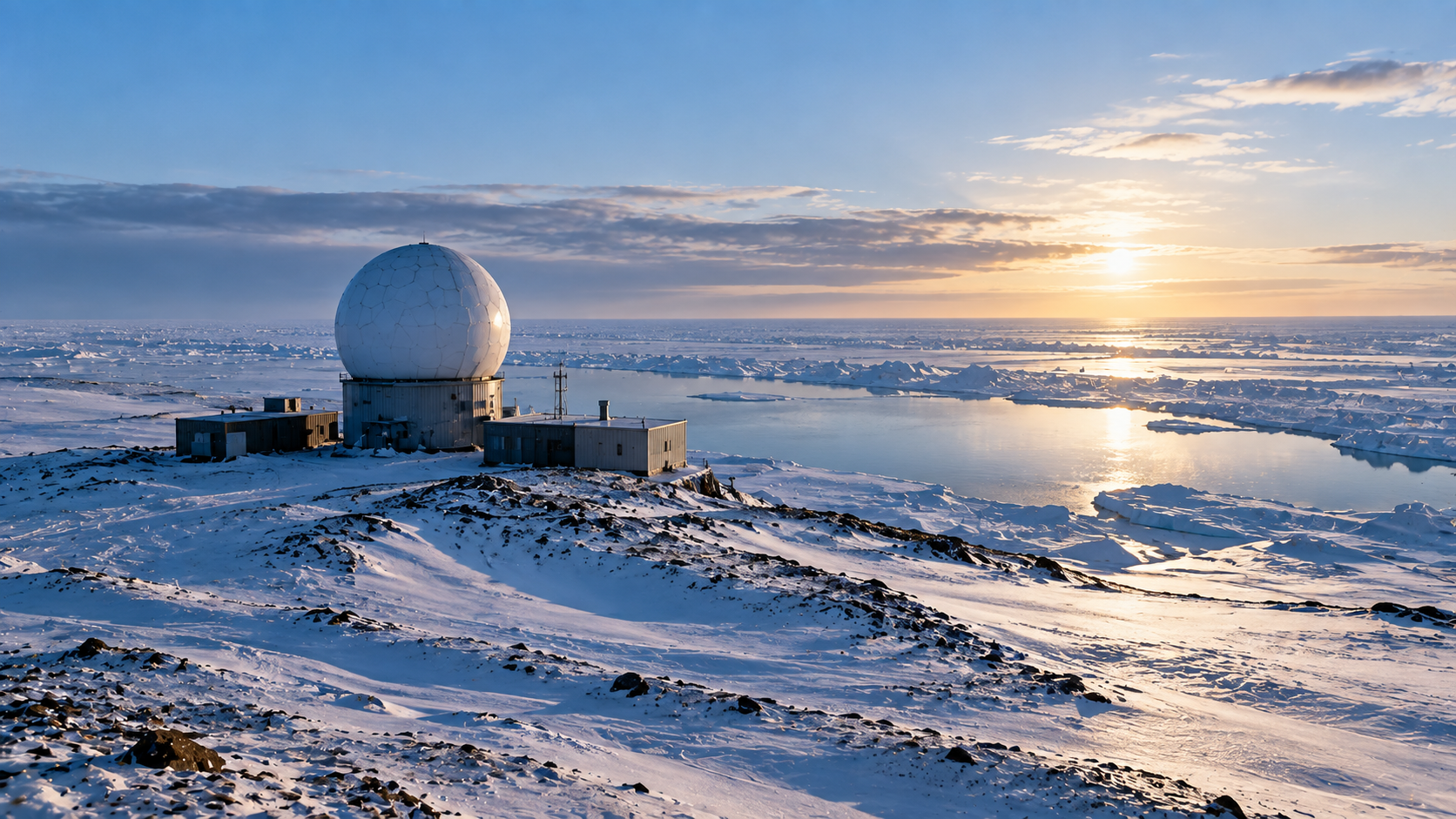
On Alaska's Arctic coast, a Cold War radar station at Point Lay watched the skies for Soviet attack. The radar is gone now, and walruses crowd the shore.
Every claim sourced
13 claims · 13 sources
0 disagreements logged
1 editorial correction
Last checked Oct 2, 2026
The story
The numbered claim log below connects facts in this story to their sources.
In the 1950s, the shortest route for Soviet bombers to reach North America ran straight over the Arctic. To catch them in time, the United States and Canada built a chain of radar stations across the top of the continent, from Alaska to Greenland. It was called the Distant Early Warning Line, or DEW Line. Its job was to watch around the clock for enemy aircraft, and later missiles, and give the warning before they reached the cities to the south. One of those stations stood at Point Lay, on Alaska's remote Chukchi Sea coast. Designated LIZ-2, it was one of the original Alaska DEW stations, built in the mid-1950s. It was a typical DEW Line station: modular buildings in the tundra, radar equipment, and an airstrip for supplies, set on the edge of Kasegaluk Lagoon. The station had a neighbor. Point Lay, called Kali in Iñupiaq, has long been home to Iñupiat families who hunt beluga, walrus and seal. For generations, the village sat on a low barrier island in the lagoon. In the 1970s, facing flooding and the need for reliable fresh water, residents moved to the mainland. After seasonal floods at their first new site, they moved again to higher ground near the Air Force radar station. The Cold War ended, and radar technology changed. DEW Line operations at Point Lay ended in 1989, and an unattended radar under the newer North Warning System briefly took over before the site was shut down in the 1990s. The Air Force cleaned up the station, and the last radar dishes near the village were dismantled between 2004 and 2006. In 2021, the Air Force documented Point Lay's buildings for the Historic American Buildings Survey as a representative DEW Line station. Today, Point Lay draws attention for a different reason. Since 2007, as summer sea ice in the Chukchi Sea has retreated, Pacific walruses have been coming ashore on the barrier islands near the village, sometimes tens of thousands of them at once, mostly mothers and calves. The community has taken the lead in protecting them, asking visitors to stay away and pilots to fly high. A station built to watch the sky for danger is gone, and the village beside it is now keeping watch over the walruses.
Last corrected: Oct 3, 2026.
Grew up near here?
Get the free Alaska guide: every Hidden Current place in the region, with what you can still see and how to get there.
State guides are coming soon. Email signup is not available yet.
Watch the short documentary
Point Lay DEW Line: The Arctic Radar That Watched for Soviet Bombers, Alaska
Claim log
| # | Claim | Sources | Status |
|---|---|---|---|
| 1 | The station is at 69.02417, -163.85722; its code is LIZ-2; the NWS system was established 1989–1990; it was deactivated in 1994 |
| Sourced |
| 2 | DEW operations ended in 1989; an unattended radar began in 1990; remediation was done by 2005 |
| Sourced |
| 3 | The station was activated in 1955 and operated until 1998 |
| Sourced |
| 4 | Point Lay was an original Alaska DEW station; the DEW Line watched for enemy aircraft and ballistic missiles; it used modular construction; the HABS survey was done in 2021 |
| Sourced |
| 5 | The Iñupiaq name is Kali |
| Sourced |
| 6 | The Iñupiaq name is Kali |
| Sourced |
| 7 | The village sat on a barrier island and moved to the mainland in the 1970s |
| Sourced |
| 8 | The village moved near the DEW station after flooding |
| Sourced |
| 9 | The dishes were dismantled 2004–2006 |
| Sourced |
| 10 | Residents hunt beluga, walrus and seal |
| Sourced |
| 11 | Walruses have hauled out since 2007, mostly cows and calves, with community stewardship |
| Sourced |
| 12 | Up to 50,000 walruses come ashore, and visitors are asked to stay away |
| Sourced |
| 13 | Aircraft are asked to fly high |
| Sourced |
Disagreements logged
No approved disagreements are logged on this page yet.
Submit a disagreement
Disagree with a fact in this story? Submit a source-backed note for editorial review. It stays private until approved and does not automatically become a correction.
Sources
- Wikipedia
- Alaska Department of Environmental Conservation
- tDAR
- Kiddle
- ExploreNorth
- CoastView
- U.S. Fish and Wildlife Service
- KTOO
- Alaska Department of Fish and Game
Corrections
| # | Correction | Sources |
|---|---|---|
| 1 | Point Lay's DEW Line station code is LIZ-2, not POW-2 |
|