Underground & HiddenRaven RockSite RCold War history
Raven Rock: The Underground Pentagon Inside a Pennsylvania Mountain
Raven Rock, or Site R, is a bunker blasted into a Pennsylvania mountain in 1951-53 to keep the military running after a nuclear attack. It is still active.
Every claim sourced
20 claims · 20 sources
0 disagreements logged
7 editorial corrections
Last checked Oct 6, 2026
The story
The numbered claim log below connects facts in this story to their sources.
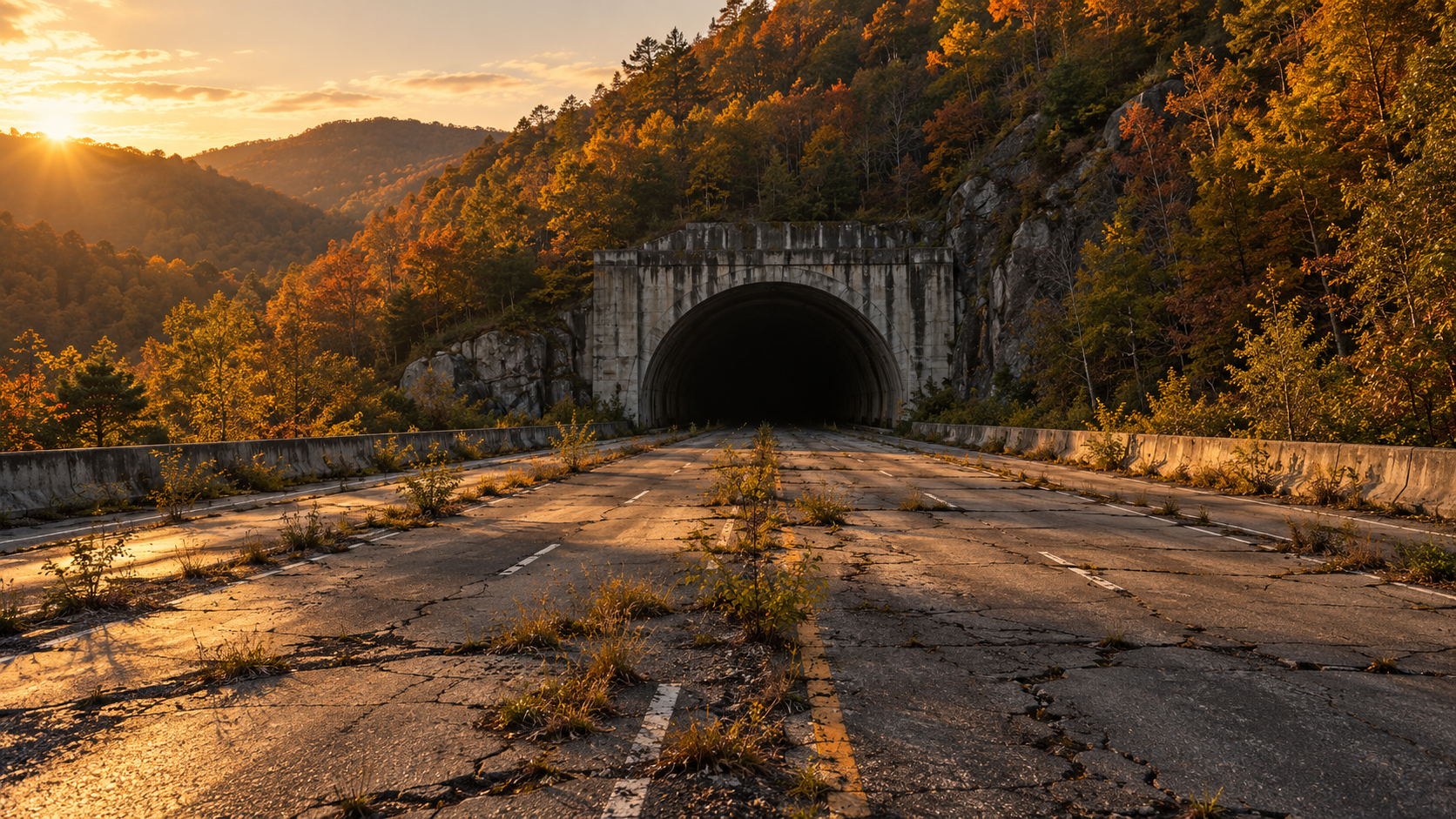
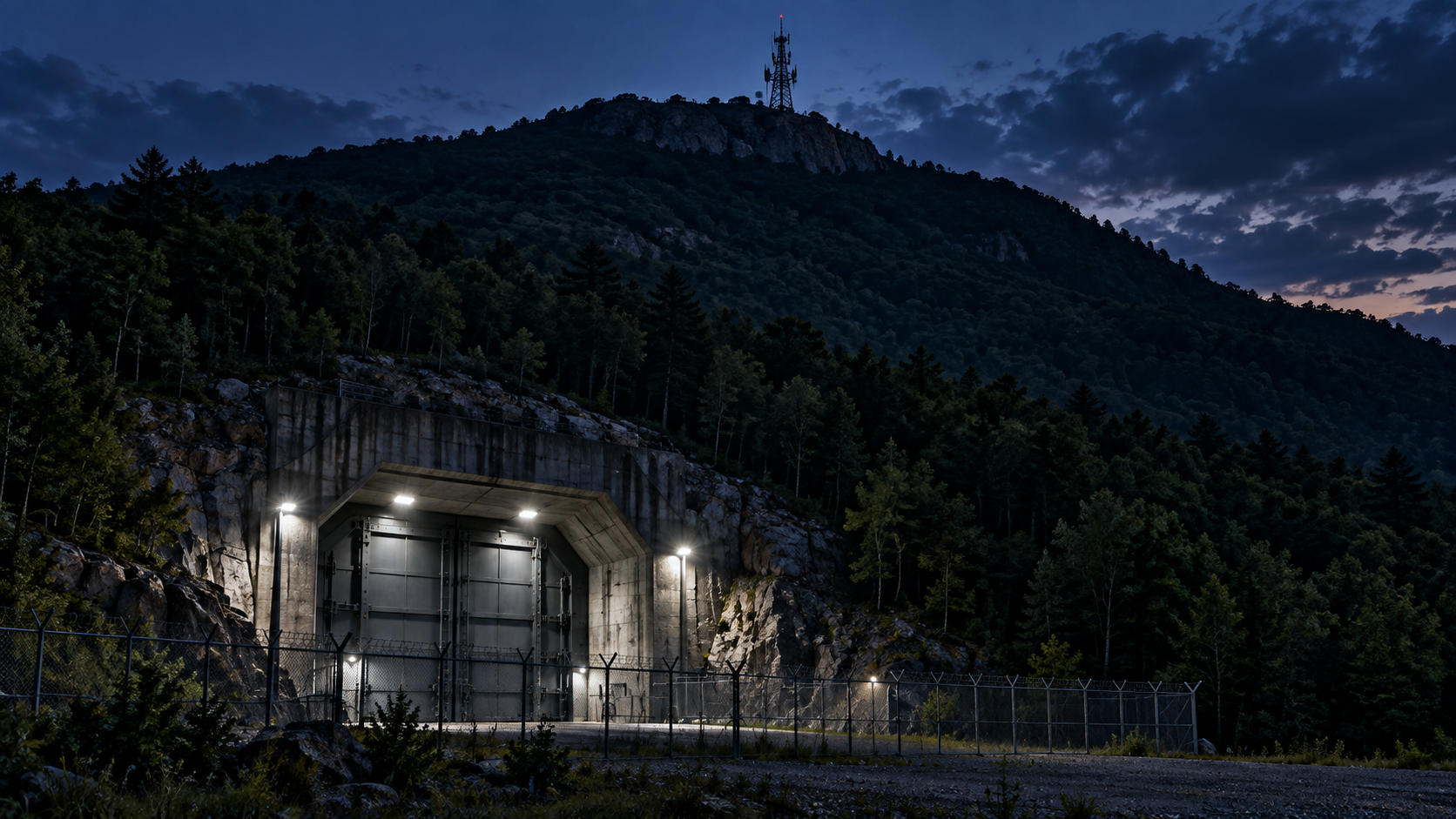
In the early years of the Cold War, the Soviet Union tested its first atomic bomb, and military planners in Washington faced a frightening question: if a nuclear attack destroyed the Pentagon, where would the military command the country's response? Their answer was a mountain in south-central Pennsylvania, a few miles north of the Maryland line. On January 23, 1951, the federal government filed a legal taking of the land at the Adams County courthouse. That same month, crews and machinery converged on the mountain. They blasted into dense greenstone rock, driving tunnels about half a mile into the mountain. The tunnels were gently curved, reportedly to lessen the effects of a blast. A 1951 news report described plans for an underground chamber 2,100 feet long, with room for a staff of 1,200 in peacetime and 5,000 in wartime. The work was hard and dangerous. There were accidental deaths on the site in 1951, and in March 1952, more than 100 workers went on strike over related construction at nearby Camp Ritchie. The initial phase cost about $35 million. In 1953, the facility became operational as the Alternate Joint Communications Center, Site R, with "R" standing for Raven Rock. Inside the mountain, the complex grew over the following decades. According to Cold War communications historians, the interior holds five three-story buildings, labeled A through E. Other accounts describe the buildings mounted on spring systems and the tunnels sealed by 30-ton blast doors. In 1955, the Office of the Secretary of Defense approved automatic activation of Raven Rock's communications center upon notice of a nuclear attack. The nickname "the Underground Pentagon" stuck, along with others: "the Rock," "the Backup Pentagon," and the National Military Command Center Reservation. The complex runs 38 communications systems and holds emergency operations centers for the Army, Navy and Air Force. Raven Rock was never needed for the war it was built for. But unlike many Cold War bunkers, it was never closed either. It's still an active military installation, and from the roads around Blue Ridge Summit, all you can see of it is the wooded mountain and the towers on top.
Last corrected: Oct 6, 2026.
Grew up near here?
Get the free Pennsylvania guide: every Hidden Current place in the region, with what you can still see and how to get there.
State guides are coming soon. Email signup is not available yet.
Watch the short documentary
Raven Rock: The Underground Pentagon Inside a Pennsylvania Mountain
Claim log
| # | Claim | Sources | Status |
|---|---|---|---|
| 1 | Raven Rock Mountain Complex's mountain summit is at 39°44′03″N 77°25′11″W |
| Sourced |
| 2 | The Raven Rock Mountain Complex, also known as Site R and The Rock, was built 1951–1953 and has been called an "underground Pentagon" |
| Sourced |
| 3 | The facility has 38 communications systems, and the Defense Information Systems Agency provides computer services at the complex |
| Sourced |
| 4 | The Army listed the mountain's elevation as 1,527 feet |
| Sourced |
| 5 | By 29 March 1952, more than 100 workers were striking from building additional Raven Rock housing at Camp Ritchie |
| Sourced |
| 6 | A 1951 report described a chamber 2,100 feet long, with space for a staff of 1,200 in peacetime and 5,000 in wartime |
| Sourced |
| 7 | The complex is in Liberty Township, Adams County, Pennsylvania |
| Sourced |
| 8 | The bunker has emergency operations centers for the Army, Navy, and Air Force |
| Sourced |
| 9 | Construction began in 1951 and the facility became operational in 1953 as the Alternate Joint Communications Center (AJCC) Site R |
| Sourced |
| 10 | The interior of Site R consists of five three-story buildings: A, B, C, D, E |
| Sourced |
| 11 | Raven Rock's elevation is 1,516 feet |
| Sourced |
| 12 | Half-mile-long tunnels were drilled into the mountain and curved gently to reduce the effects of a blast |
| Sourced |
| 13 | Fort Ritchie is now abandoned and owned by a private developer |
| Sourced |
| 14 | The initial phase of construction cost around $35 million; there were only three underground buildings by 1953 |
| Sourced |
| 15 | The complex was created by blasting into the side of a greenstone mountain |
| Sourced |
| 16 | In 1955, the Office of the Secretary of Defense approved automatic activation of Raven Rock's Alternate Joint Communication Center upon notice of a nuclear attack |
| Sourced |
| 17 | On January 23, 1951, the federal government filed a Declaration of Taking at the Adams County courthouse |
| Sourced |
| 18 | Site R is described as a 300,000-square-foot fortress with five buildings on seismic spring systems and 30-ton blast doors |
| Sourced |
| 19 | There were accidental deaths on the site in 1951 |
| Sourced |
| 20 | Site R's other names include NMCC-R, ANMCC, AJCC, and "Backup Pentagon" |
| Sourced |
Disagreements logged
No approved disagreements are logged on this page yet.
Submit a disagreement
Disagree with a fact in this story? Submit a source-backed note for editorial review. It stays private until approved and does not automatically become a correction.
Sources
- Wikipedia
- Wikiwand
- military-history.fandom.com
- coldwar-c4i.net
- whcacannonball.blogspot.com
- warhistoryonline.com
- thedarkatlas.com
- publicintelligence.net
Corrections
| # | Correction | Sources |
|---|---|---|
| 1 | Raven Rock is not only a Cold War relic; it remains an active military installation with emergency operations centers for the Army, Navy, and Air Force |
|
| 2 | Details such as 30-ton blast doors, spring-mounted buildings, and 300,000 square feet come from secondary sources, not published government records |
|
| 3 | Sources disagree on how many buildings were inside: three underground buildings by 1953 |
|
| 4 | Sources disagree on how many buildings were inside: five three-story buildings |
|
| 5 | Sources disagree on the mountain's elevation: 1,527 feet |
|
| 6 | Sources disagree on the mountain's elevation: 1,516 feet |
|
| 7 | The coordinates on this page mark the mountain summit, not the bunker entrances |
|