
Isolated PlacesKirunaSwedenmining
Kiruna, Sweden: The Arctic City Moving to Escape Its Own Mine
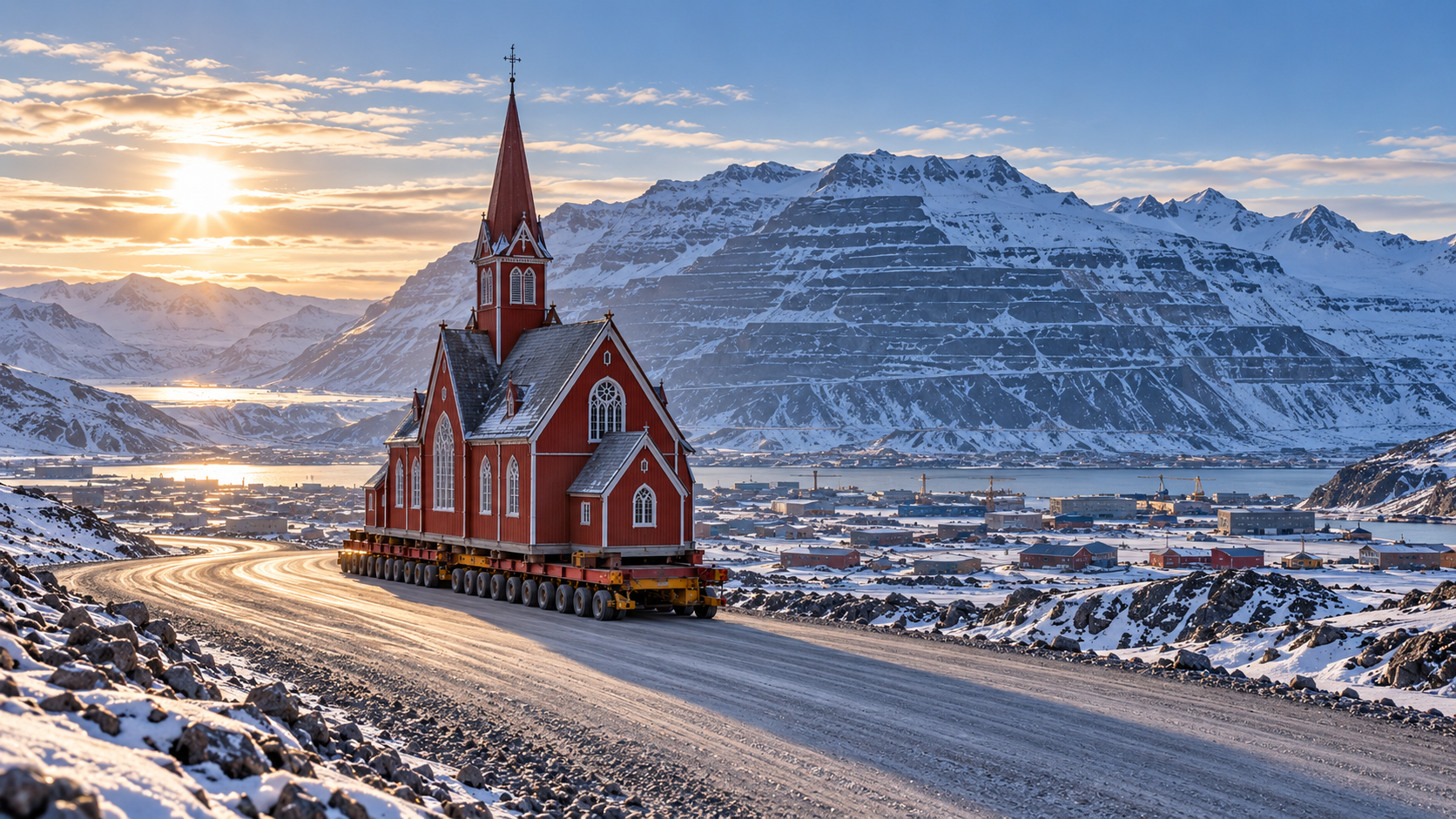
The world's largest underground iron ore mine is cracking the ground under Kiruna, Sweden, so its city center is moving about 3 km east, church and all.
1 claim needs sources
24 claims · 23 sources
0 disagreements logged
4 editorial corrections
Last checked Oct 4, 2026
The story
The numbered claim log below connects facts in this story to their sources.
Kiruna exists because of iron. The town was founded around 1900 by the state-owned mining company LKAB, high in Swedish Lapland, beside a mountain made of iron ore called Kiirunavaara. For more than a century, the mine and the town grew up together. Today LKAB runs the world's largest underground iron ore mine here, and the company produces nearly 80 percent of Europe's iron ore. The problem is where the ore goes. The deposit runs at an angle down beneath the town itself, and as it's mined from deeper and deeper underground, the ground above shifts and cracks. Residents began seeing cracks in buildings and roads. LKAB is now mining down to a depth of 1,365 meters. In 2004, LKAB told Kiruna's municipal leaders that if mining was going to continue, the town center would have to move. Together, the company and the town planned to relocate the city center about 3 kilometers to the east, onto stable ground, with LKAB paying for it. The project has been estimated to cost at least $1.2 billion. Work began in 2014, and the first buildings in the new center were finished in 2018. The first to go up was the new city hall, called Kristallen, "the Crystal." The old town hall, despite being protected as cultural heritage, was a brick building that would have been too complicated to move, and it was demolished in 2019. That was the pattern for most of old Kiruna: about 39 historic buildings judged worth preserving are being moved to the new center, while most others are demolished and replaced with new ones. The old city center isn't dangerous to stand in, but it isn't safe to build on, and it's set to become parks and green space. The most spectacular move came on August 19 and 20, 2025. Kiruna Church, completed in 1912 and one of Sweden's largest wooden buildings, was lifted whole onto two giant self-propelled transporters. The 672-ton church crept about 5 kilometers along a specially widened road to its new site between the cemetery and the new city center, while thousands of spectators watched. The move isn't over. The relocation is expected to be completed by 2035, and in 2025 LKAB announced that expanding the mine would require relocating about 6,000 more people and 2,700 homes. The upheaval has also put new pressure on the Sami reindeer herders who lived in the area long before LKAB arrived. Some residents worry the new city center may be up to 10 degrees Celsius colder in winter.
Last corrected: Oct 4, 2026.
Grew up near here?
Get the free state guide: every Hidden Current place in the region, with what you can still see and how to get there.
State guides are coming soon. Email signup is not available yet.
Watch the short documentary
Kiruna, Sweden: The Arctic City Moving to Escape Its Own Mine
Claim log
| # | Claim | Sources | Status |
|---|---|---|---|
| 1 | LKAB's Visitor Centre is at Malmvägen 9B, Kiruna, at 67.85634, 20.22542 |
| Sourced |
| 2 | Kiruna Church is at 67.852000, 20.232972 |
| Sourced |
| 3 | Kiruna is moving because of ground subsidence from the expansion of the world's largest underground iron ore mine |
| Sourced |
| 4 | A new home is being created about 3 kilometers east of the old town, in a multi-decade process expected to be completed by 2035 |
| Sourced |
| 5 | Kiruna was established 125 years ago as a city for the iron ore mining operations of state-owned LKAB |
| Sourced |
| 6 | The city's relocation was first planned in 2004 |
| Sourced |
| 7 | In 2004, LKAB informed Kiruna's municipal management that it was necessary to move the town center |
| Sourced |
| 8 | LKAB accounts for nearly 80 percent of Europe's iron ore production; the ore deposit extends beneath the city, and cracks form in the surface as ore is extracted |
| Sourced |
| 9 | Work to relocate the city center began in 2014, and the first buildings were completed in 2018 |
| Sourced |
| 10 | Work began in 2014, with the first buildings in the new town completed in 2018 |
| Sourced |
| 11 | The first building in the new town was the city hall, Kristallen (the Crystal) |
| Sourced |
| 12 | The relocation has put increased pressure on Sami reindeer herders, who lived in the area long before LKAB arrived |
| Sourced |
| 13 | LKAB and Kiruna planned to move the city center 3 kilometers east, at a cost of at least 1.2 billion US dollars financed by LKAB |
| Sourced |
| 14 | 39 historical buildings worth preserving will be moved; most buildings are demolished and replaced |
| Sourced |
| 15 | The protected Town Hall was demolished in 2019 because the brick building would be complicated to move |
| Sourced |
| 16 | The former city center is not suitable for buildings but not dangerous for humans, and will become parks and recreation areas |
| Sourced |
| 17 | LKAB is mining down to level 1,365 metres |
| Sourced |
| 18 | Residents began seeing cracks in buildings and roads as the mine expanded deeper |
| Sourced |
| 19 | Kiruna Church was completed in 1912 and was set to reopen at its new location at the end of 2026 |
| Sourced |
| 20 | Kiruna Church was moved on August 19–20, 2025, to a new location between the cemetery and the new city center |
| Sourced |
| 21 | The 40 × 40 × 37 meter, 672.4-ton church was moved by two 28-axle self-propelled modular transporters over two days, about 5 kilometres |
| Sourced |
| 22 | Kiruna Church is one of Sweden's largest wooden buildings |
| Sourced |
| 23 | Thousands of spectators watched the church move |
| Sourced |
| 24 | LKAB announced the mine expansion would require relocating an additional 6,000 people and 2,700 | Source needed | Needs source |
Disagreements logged
No approved disagreements are logged on this page yet.
Submit a disagreement
Disagree with a fact in this story? Submit a source-backed note for editorial review. It stays private until approved and does not automatically become a correction.
Sources
- TripAdvisor
- Wikipedia
- CNBC
- LKAB
- High North News
- Institution of Civil Engineers
- Datawrapper
- Kiruna Lappland
- The Globe and Mail
- ArchDaily
Corrections
| # | Correction | Sources |
|---|---|---|
| 1 | Kiruna has not finished moving; the relocation is expected to be completed by 2035 |
|
| 2 | Most of Kiruna is not being physically moved; most buildings are demolished and replaced, while 39 historical buildings are moved |
|
| 3 | The city center is moving about 3 kilometers east, but Kiruna Church traveled about 5 kilometres along its route |
|
| 4 | Large sections of the city centre are being moved 3–6 kilometres east, not a single fixed distance |
|
More Isolated Places places
- The Island Almost Nobody Can Reach
- Supai, Arizona: The Village With No Road Where Mail Comes by Mule
- Whittier, Alaska: The Town That Lives in One Building
- Bluie East Two: The WWII Air Base Abandoned in Greenland
- Point Roberts: The U.S. Town You Reach by Driving Through Canada
- Kentucky Bend: The Kentucky Exclave You Reach Through Tennessee