
Isolated Placessupaiarizonagrand canyon
Supai, Arizona: The Village With No Road Where Mail Comes by Mule
Deep in a side canyon of the Grand Canyon, Supai sits eight miles from the nearest road. It is the last place in America where the mail arrives by mule.
Every claim sourced
11 claims · 11 sources
0 disagreements logged
0 editorial corrections
Last checked Oct 2, 2026
The story
The numbered claim log below connects facts in this story to their sources.
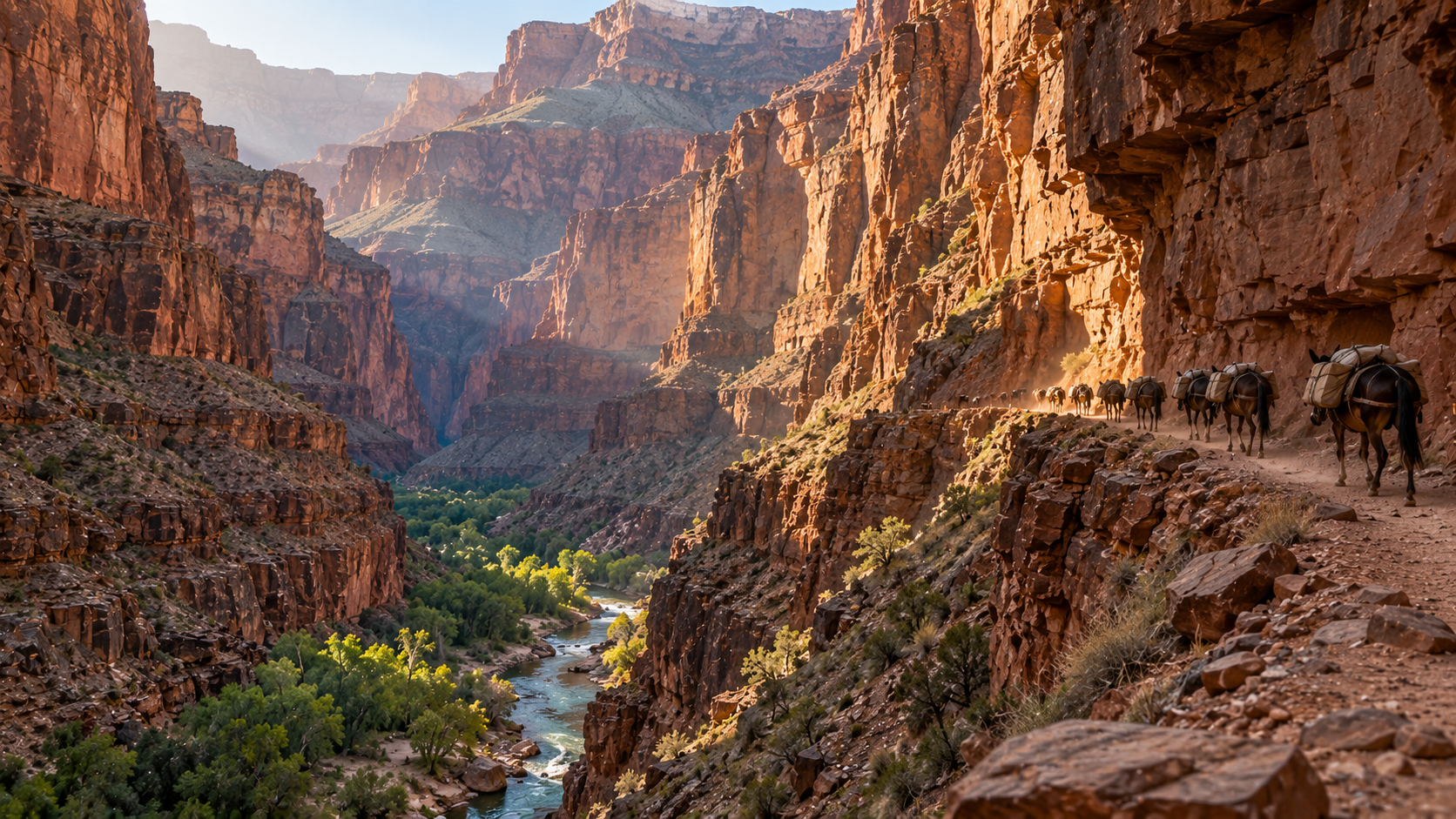
At the bottom of Havasu Canyon, a side canyon of the Grand Canyon, is a village with no road leading to it. Supai is the capital of the Havasupai Indian Reservation and home of the Havasupai people, whose name means "people of the blue-green water," for the turquoise creek that runs through their canyon. The U.S. Department of Agriculture has called it the most remote community in the contiguous United States. There are no cars in Supai. The nearest road ends at Hualapai Hilltop, on the canyon rim, and from there the only ways down are a steep 8-mile trail, on foot or by mule, or a helicopter. That isolation shapes everything about daily life, including the mail. Supai is the only place in the United States where the Postal Service still carries mail in and out by mule. A contract carrier picks up the mail at Peach Springs, Arizona, and trucks it about 60 miles across remote reservation roads to the trailhead. There it's loaded onto pack mules for the trip down. Most of what arrives isn't letters. Families order groceries, medicine and household goods by mail, and the Peach Springs post office even has a walk-in freezer to hold perishable food waiting to go down to Supai. The mule trains make the trip six days a week. The saddle once used by the lead rider was retired in 2015 and is now in the Smithsonian's National Postal Museum. Mail sent out from Supai carries a special postmark noting that it traveled by mule, which has made the tiny post office a favorite stop for visitors. Those visitors mostly come for the water. Downstream from the village, Havasu Creek drops over a series of turquoise waterfalls, including Havasu Falls and Mooney Falls. The Havasupai Tribe manages tourism carefully, with limited permits, required overnight stays, and no day hiking, and the permits typically sell out fast. About 200 people live in Supai. The 2010 census counted 208, and the 2020 census counted zero, an error that shows how easily a community without a road can be overlooked. The mule trains still make the trip into the canyon.
Last corrected: no editorial corrections on this page yet.
Grew up near here?
Get the free Arizona guide: every Hidden Current place in the region, with what you can still see and how to get there.
State guides are coming soon. Email signup is not available yet.
Watch the short documentary
Supai, Arizona: The Village With No Road Where Mail Comes by Mule
Claim log
| # | Claim | Sources | Status |
|---|---|---|---|
| 1 | Supai village is at 36.23693, -112.68908 (GNIS 12003) |
| Sourced |
| 2 | Supai village is at 36.23693, -112.68908 (GNIS 12003) |
| Sourced |
| 3 | Hualapai Hilltop is at 36.16221, -112.70936 |
| Sourced |
| 4 | Supai is the capital of the reservation; mail is carried by mule; it is 8 miles from the road; there are no cars; population was 208 in 2010 and zero in 2020; the USDA called it the most remote community |
| Sourced |
| 5 | Mail goes from Peach Springs 60 miles to the trailhead; the post office has a walk-in freezer; groceries come by mail |
| Sourced |
| 6 | The mule trains run six days a week; the saddle was retired in 2015 |
| Sourced |
| 7 | Mail carries a special mule postmark |
| Sourced |
| 8 | Reservations are required, no day hikes are allowed, stays are three days, the drive is 4 hours, there are no services at the trailhead, and the campground is 2 miles past the village |
| Sourced |
| 9 | 2026 early access opened January 21 and general sales February 1 |
| Sourced |
| 10 | 2026 prices are about $455 per person for camping and about $2,277 per lodge room |
| Sourced |
| 11 | Permits sell out fast |
| Sourced |
Disagreements logged
No approved disagreements are logged on this page yet.
Submit a disagreement
Disagree with a fact in this story? Submit a source-backed note for editorial review. It stays private until approved and does not automatically become a correction.
Sources
- USGS
- TopoQuest
- Wikipedia
- USPS blog
- Smithsonian National Postal Museum
- Grand Canyon Guru
- National Park Service
- Reserve Nature
- Solitarius
Corrections
No editorial corrections are logged on this page yet.
Hidden Current within 100 miles
More Isolated Places places
- The Island Almost Nobody Can Reach
- Kiruna, Sweden: The Arctic City Moving to Escape Its Own Mine
- Whittier, Alaska: The Town That Lives in One Building
- Bluie East Two: The WWII Air Base Abandoned in Greenland
- Point Roberts: The U.S. Town You Reach by Driving Through Canada
- Kentucky Bend: The Kentucky Exclave You Reach Through Tennessee