
Hidden Beneath CitiesSeattle UndergroundSeattle historyGreat Seattle Fire
Seattle Underground: The City Buried After the Great Fire of 1889, Washington
After the Great Seattle Fire of 1889, Pioneer Square's streets were raised, in places by nearly 30 feet, burying old sidewalks and storefronts below.
Every claim sourced
18 claims · 18 sources
0 disagreements logged
8 editorial corrections
Last checked Oct 6, 2026
The story
The numbered claim log below connects facts in this story to their sources.
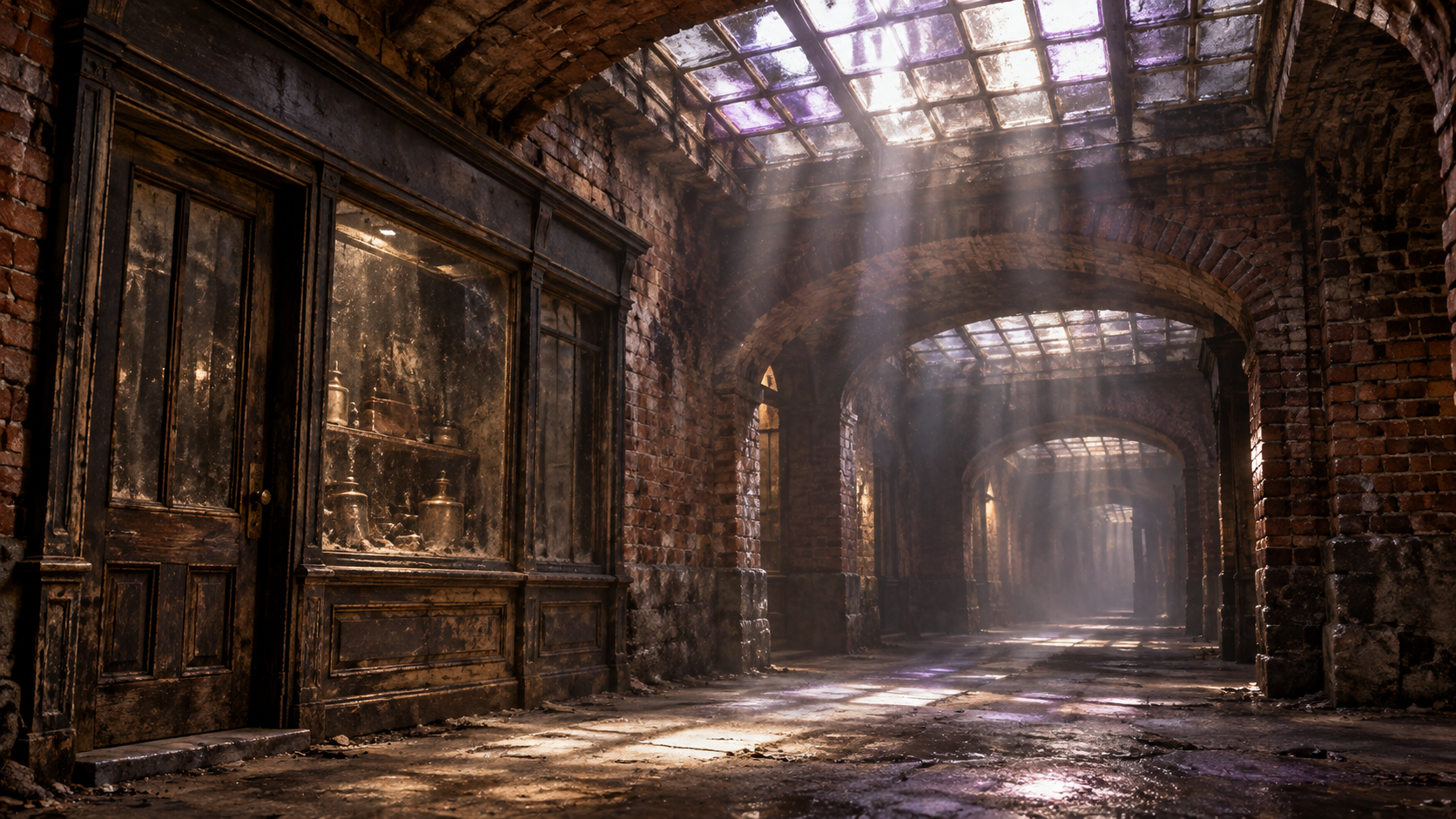
In its early years, Seattle had a drainage problem. Much of what's now Pioneer Square was built on filled-in tidelands, and the low ground often flooded. The town was also mostly wood. On the afternoon of June 6, 1889, a glue pot in a carpentry shop caught fire. The flames spread through the wooden buildings, and by the next morning the Great Seattle Fire had destroyed the city's entire central business district, about 25 blocks. Seattle rebuilt fast, and it rebuilt differently. New buildings in the burned district had to be made of brick and stone. And the city decided to fix its flooding problem by raising the streets. It didn't raise the buildings, though. Property owners rebuilt right away at the old ground level. Meanwhile, the city built concrete walls along the edges of the streets, then filled in between them with earth washed down from the steep hillsides. The new streets ended up one to two stories higher than before, generally about 12 feet, and in some places nearly 30 feet. For a while, Seattle had two levels. The new streets ran high above, while the old sidewalks and shop entrances sat down below in front of the buildings. Pedestrians climbed ladders to get between them. Eventually the gaps were covered over with new sidewalks, set with small glass skylights so daylight could reach the walkways beneath. Many of those glass panes later turned purple in the sun. The old ground floors became basements, and the buried sidewalks became an underground world of storefronts and passageways. In 1907, the city condemned the underground, out of fear of the bubonic plague. The spaces didn't go entirely unused afterward; some were later used for illegal businesses. For decades, most people forgot about them. That changed in the 1960s, thanks to a Seattle newspaper columnist and preservationist named Bill Speidel. He had already been cleaning out sections of the underground, and in May 1965, he led tours as part of a civic "Know Your Seattle Day." Five hundred people paid a dollar each. Bill Speidel's Underground Tour has been running ever since, and in 2013 a second company, Beneath the Streets, began leading tours of other sections. Today, visitors still walk past those buried storefronts and look up at the old glass skylights, now covered by the sidewalks of present-day Pioneer Square.
Last corrected: Oct 6, 2026.
Grew up near here?
Get the free Washington guide: every Hidden Current place in the region, with what you can still see and how to get there.
State guides are coming soon. Email signup is not available yet.
Watch the short documentary
Seattle Underground: The City Buried After the Great Fire of 1889, Washington
Claim log
| # | Claim | Sources | Status |
|---|---|---|---|
| 1 | The Pioneer Building is at 600 1st Avenue, Pioneer Square, Seattle, at 47°36′08″N 122°20′01″W; NRHP reference No. 77001340, added May 5, 1977 |
| Sourced |
| 2 | The Seattle Underground is a series of areaways, former sidewalks, building basements, and other spaces beneath present-day buildings and sidewalks; many were created during the reconstruction and raising of street grades after the Great Seattle Fire of 1889 |
| Sourced |
| 3 | In different locations, the change in grade varied from several feet to one story |
| Sourced |
| 4 | In 1907, the city condemned the Underground for fear of bubonic plague |
| Sourced |
| 5 | In 1965, Bill Speidel formally created Bill Speidel's Underground Tour, which continues to operate from the Pioneer Building and adjacent buildings |
| Sourced |
| 6 | A second tour company, Beneath the Streets, was created in 2013 |
| Sourced |
| 7 | The Great Seattle Fire destroyed the entire central business district on June 6, 1889, after an overheated glue pot in a carpentry shop started it |
| Sourced |
| 8 | By the morning of June 7, the fire had burned 25 city blocks |
| Sourced |
| 9 | Visitors to the Seattle Underground see the original street level (now basement level) of buildings and storefronts built after the fire |
| Sourced |
| 10 | After the fire, new construction was required to be of masonry, and the streets were regraded one to two stories higher; Pioneer Square had been built mostly on filled-in tidelands and often flooded |
| Sourced |
| 11 | The streets were raised generally 12 feet higher than before, in some places nearly 30 feet, using concrete walls and material sluiced from the hillsides |
| Sourced |
| 12 | At first, pedestrians climbed ladders between street level and the sidewalks; vault lights with small clear glass panes that later became amethyst-colored were installed over the gap |
| Sourced |
| 13 | The underground was used as gambling halls and speakeasies after it was condemned |
| Sourced |
| 14 | In May 1965, as part of "Know Your Seattle Day," 500 people paid one dollar each to tour the Seattle Underground |
| Sourced |
| 15 | The 75-minute tour begins beneath Doc Maynard's Public House; tickets are available online, by phone at 206-682-4646, or at the ticket counter at 614 First Avenue |
| Sourced |
| 16 | Extra tours are offered every half hour, sold at the box office only, June through August |
| Sourced |
| 17 | Tours routinely sell out; the tour location is a 3-minute walk from Pioneer Square light rail station and a 7-minute walk from the downtown ferry dock |
| Sourced |
| 18 | The Great Seattle Fire leveled 32 blocks of downtown |
| Sourced |
Disagreements logged
No approved disagreements are logged on this page yet.
Submit a disagreement
Disagree with a fact in this story? Submit a source-backed note for editorial review. It stays private until approved and does not automatically become a correction.
Sources
- Wikipedia
- Wikiwand
- Geek Frontiers
- undergroundtour.com
- santorinidave.com
Corrections
| # | Correction | Sources |
|---|---|---|
| 1 | The streets were not uniformly raised one story; the regrade was generally 12 feet and in some places nearly 30 feet, described as one to two stories |
|
| 2 | Wikipedia describes the change in grade as varying from several feet to one story |
|
| 3 | The Seattle Underground is mostly the original street level of buildings and storefronts built after the fire, not the pre-fire downtown that burned |
|
| 4 | Not all of the underground spaces date from the post-fire regrade; many, but not all, were created then |
|
| 5 | Sources disagree on how many blocks burned: 25 city blocks |
|
| 6 | Sources disagree on how many blocks burned: 32 blocks of downtown |
|
| 7 | Sources disagree on how the fire began: an overheated glue pot |
|
| 8 | Sources disagree on how the fire began: an overturned glue pot |
|
More Hidden Beneath Cities places
- Underground river beneath a City
- Underground City, Turkey (Derinkuyu Yeraltı Şehri)
- Cold War Military Command Center Inside a Colorado Mountain
- Chicago's Deep Tunnel: 109 Miles of Tunnels That Swallow Storms
- Kincaid's Cave: The Grand Canyon Egyptian Cave That Never Was
- Mail Rail: London's Secret Underground Railway for the Post