
Forgotten AmericaButler TennesseeTVA historyWatauga Lake
Butler, Tennessee: The Town That Wouldn't Drown
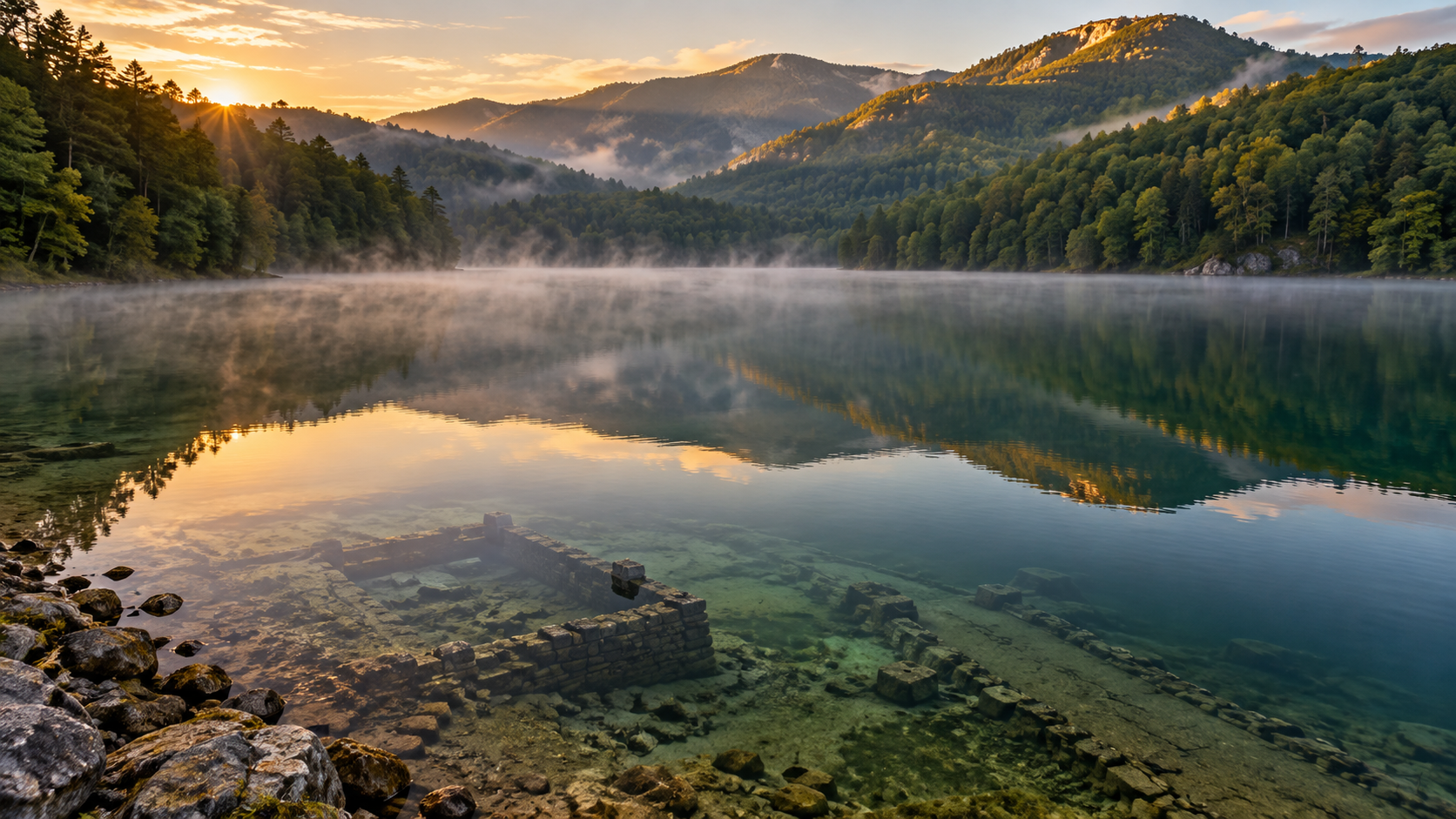
Before the TVA flooded the valley in 1948, Butler, Tennessee moved to higher ground. The old town's streets and foundations still lie under Watauga Lake.
Every claim sourced
22 claims · 22 sources
0 disagreements logged
7 editorial corrections
Last checked Oct 6, 2026
The story
The numbered claim log below connects facts in this story to their sources.
In the mountains of northeastern Tennessee, where Roan Creek flows into the Watauga River, there was once a busy little town called Butler. It was the commercial center of the Watauga Valley, with hotels, stores, restaurants, doctors' and dentists' offices, churches, a movie theater and its own private high school, Watauga Academy. Butler also had a flooding problem. The town flooded in 1867, 1886, 1901, 1902, 1916, 1924 and 1940. The 1940 flood killed six people, destroyed homes and washed out the railroad. In 1942, the Tennessee Valley Authority began building Watauga Dam downstream, to control floods and generate electricity. The dam would create a reservoir right over Butler. World War II halted construction, leaving the dam half-finished and the town in limbo. Residents couldn't sell their homes, and many doubted the dam would ever be completed. But in 1946, work resumed, and the TVA began buying homes, farms and businesses. On September 6, 1947, it completed the purchase of the town, including city hall and the jail, for $35,000. Butler, with about 600 residents and more than 125 homes and 50 businesses, moved to higher ground. Some people took their houses with them, moving the buildings to new sites. Graves were dug up and moved. One former resident later described the experience as "like a year-long funeral." Across the whole dam project, 761 families were relocated. On December 1, 1948, the dam's gates closed, and the water began to rise over Old Butler. It was the only incorporated town ever flooded by a TVA reservoir. Butler rebuilt on higher ground beside the new lake and became known as "the town that wouldn't drown." Old Butler stayed underwater. But in 1983, the TVA drew the lake down to work on the dam, and for a brief time the old town reappeared. Former residents walked the muddy streets, still lined with tree stumps, past foundations, stone walls, the concrete one-room jail and the rock walls of Don Stout's shoe store. Today, the Butler Museum, opened in 2000, preserves the old town's story. The rest of it is still at the bottom of Watauga Lake.
Last corrected: Oct 6, 2026.
Grew up near here?
Get the free Tennessee guide: every Hidden Current place in the region, with what you can still see and how to get there.
State guides are coming soon. Email signup is not available yet.
Watch the short documentary
Butler, Tennessee: The Town That Wouldn't Drown
Claim log
| # | Claim | Sources | Status |
|---|---|---|---|
| 1 | Butler's new site is on Tennessee State Route 67 at 36°21′25″N 82°01′49″W |
| Sourced |
| 2 | The TVA began construction of Watauga Dam in 1942; construction was delayed by World War II and finished in 1948, when the town was submerged |
| Sourced |
| 3 | Butler was the only incorporated town inundated by a TVA reservoir |
| Sourced |
| 4 | In 1948, the town, with a population of about 600 and more than 125 homes and 50 businesses, was relocated to higher ground |
| Sourced |
| 5 | Old Butler is called "the town that wouldn't drown" and is commemorated in a museum and by Old Butler Days, an annual festival in August |
| Sourced |
| 6 | In 1983, a drawdown of the lake exposed the remains of Old Butler for a brief time, allowing former residents to visit the site |
| Sourced |
| 7 | Watauga Dam was completed and its gates opened December 1, 1948 |
| Sourced |
| 8 | In 1940, the town was hit by a flood that killed six people, destroyed homes and washed out the railroad |
| Sourced |
| 9 | People in the flood plain were not allowed to sell their homes while the TVA completed the dam, and many moved their homes |
| Sourced |
| 10 | By 1947, the TVA had purchased all the property |
| Sourced |
| 11 | The Butler Museum is at 123 Selma Curtis Road in Butler |
| Sourced |
| 12 | Nearly 800 families and several churches and homes were relocated to higher ground |
| Sourced |
| 13 | A former resident described the relocation as "like a year-long funeral" |
| Sourced |
| 14 | On September 6, 1947, the TVA completed the purchase of the town, including city hall and the jail, for $35,000 |
| Sourced |
| 15 | In the mid-1940s, 650 families called Butler home, with hotels, stores, restaurants, churches, schools and a movie theater; Watauga Academy was located there |
| Sourced |
| 16 | On December 1, 1948, the Watauga Dam gates were closed; 761 families were relocated |
| Sourced |
| 17 | The Butler and Watauga Valley Heritage Museum opened in 2000 |
| Sourced |
| 18 | The town flooded in 1867, 1886, 1901, 1902, 1916, 1924 and 1940 |
| Sourced |
| 19 | In the 1983 drawdown, Don Stout's stone shoe store and the concrete one-room jail stood out from the other foundations along muddy streets lined with trees |
| Sourced |
| 20 | TVA left the dam half-finished during World War II and resumed work in 1946 |
| Sourced |
| 21 | Photos at the Butler Museum show people digging up old graves |
| Sourced |
| 22 | In 1983, TVA drained Watauga Lake to work on the dam, exposing roads, stone walls, foundations and the rock walls of an old shoe shop |
| Sourced |
Disagreements logged
No approved disagreements are logged on this page yet.
Submit a disagreement
Disagree with a fact in this story? Submit a source-backed note for editorial review. It stays private until approved and does not automatically become a correction.
Sources
- Wikipedia
- WJHL
- museumofbutlertn.org
- ghostlakes.blogspot.com
- The Tennessee Magazine
Corrections
| # | Correction | Sources |
|---|---|---|
| 1 | Old Butler's remains are not documented as reappearing regularly; they were exposed during a 1983 drawdown to work on the dam |
|
| 2 | The 1983 exposure came from TVA draining the lake to work on the dam, not from natural low water |
|
| 3 | Sources disagree on Butler's size: a population of about 600 |
|
| 4 | Sources disagree on Butler's size: 650 families |
|
| 5 | Sources disagree on how many families were relocated: nearly 800 |
|
| 6 | Sources disagree on how many families were relocated: 761 across the dam project |
|
| 7 | The old town site's exact coordinates are not verified; the listed coordinates mark the new town on Tennessee State Route 67 |
|