Forgotten Americamining contaminationbuyoutsrelocation
Picher, Oklahoma: The Mining Town Its Own Mines Destroyed
Picher, Oklahoma mined the lead and zinc that helped arm America. The mining left the town poisoned and undermined, and by 2009 it had shut down for good.
Every claim sourced
19 claims · 19 sources
0 disagreements logged
0 editorial corrections
Last checked Oct 2, 2026
The story
The numbered claim log below connects facts in this story to their sources.
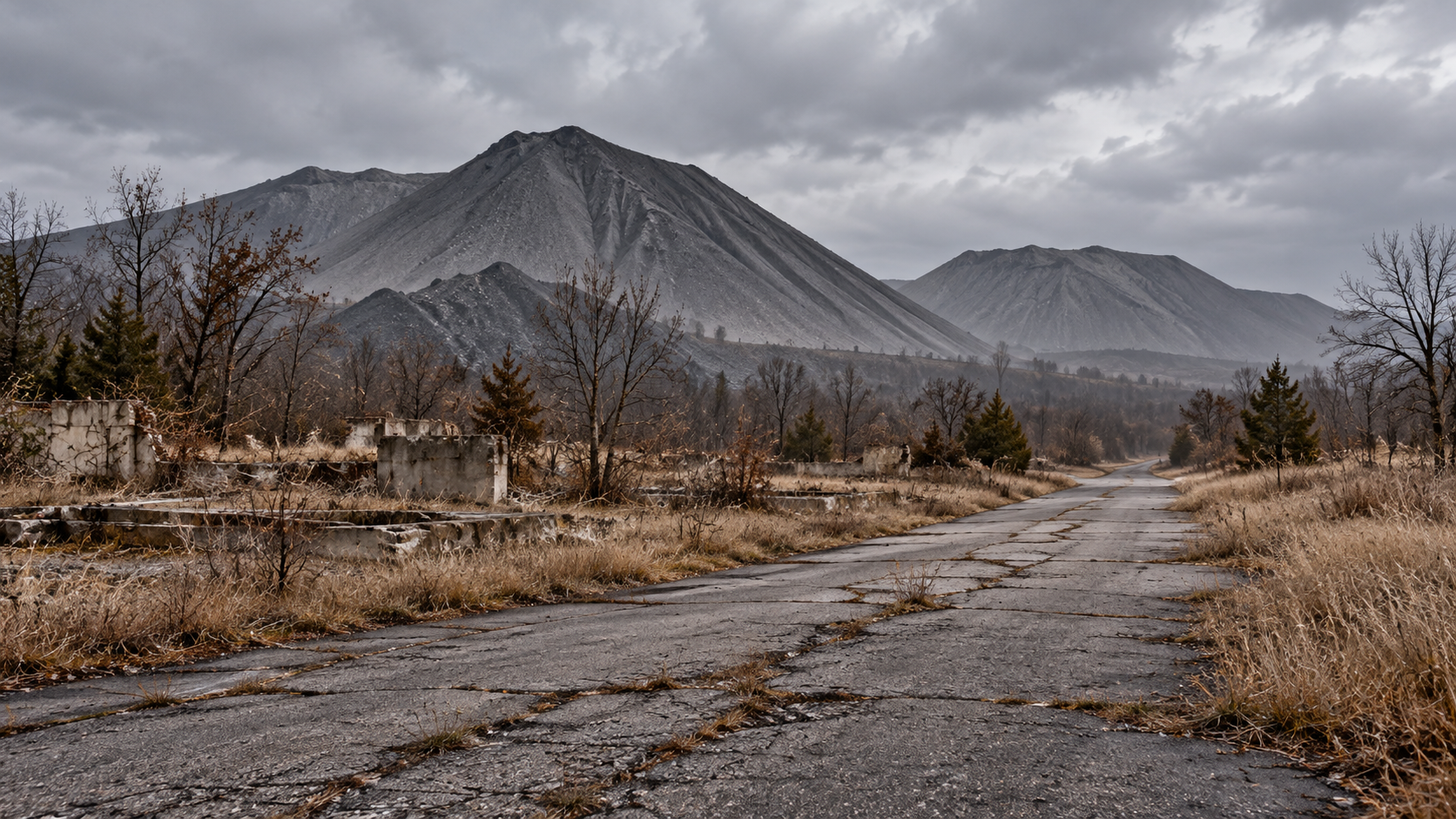
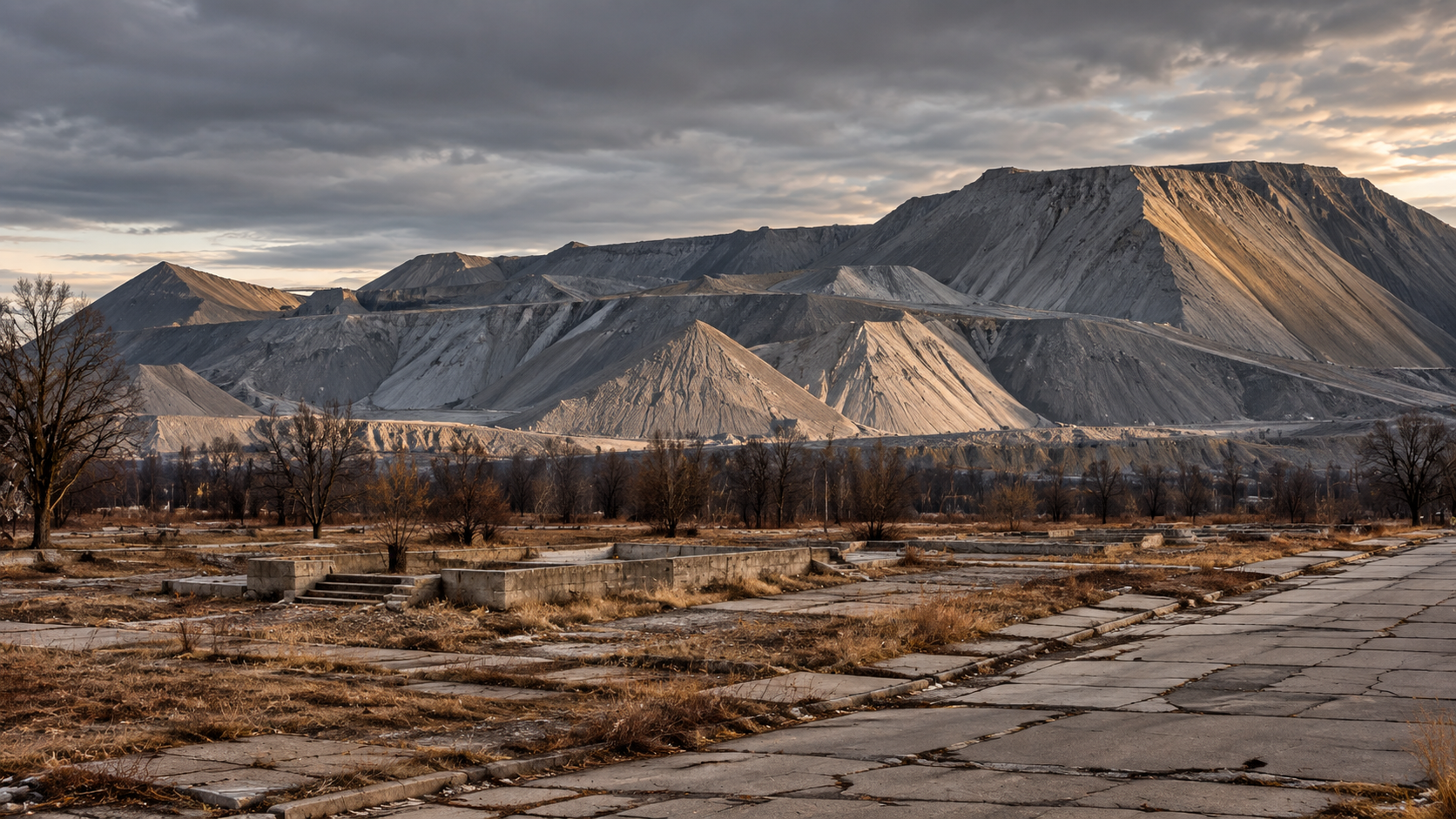
In the early 20th century, the corner where Oklahoma, Kansas and Missouri meet sat on one of the richest lead and zinc deposits in the world. It was called the Tri-State Mining District, and at its heart was Picher, named for Oliver S. Picher of the Picher Lead Company. Picher incorporated in 1918 and grew fast. By 1926 it had 14,252 residents, and thousands of miners worked underground beneath the town. The region's metals went to war. According to NBC News, about 75 percent of the bullets and shells American troops fired in both World Wars were made from metals mined in the Tri-State district. Mining left two things behind. The first was underground: a maze of tunnels and caverns carved beneath the town. As mines closed, operators often removed the rock pillars that had been left to hold up the caverns, pulling out the ore inside them. The second was on the surface. After the ore was separated, the leftover crushed rock, called chat, was piled into enormous gray hills all around town. Children rode bikes on them, played on them, and used the sand in their sandboxes. Nobody warned them that the chat was laced with lead. The ore ran out, and the mines closed in 1967. When the pumps that had kept the underground workings dry were shut off, the mines filled with water, and by 1979 acid mine water was pouring into Tar Creek and turning it orange. On September 8, 1983, the EPA designated the area part of the Tar Creek Superfund site. In 1994, testing by the Indian Health Service found that about a third of the Native American children tested in the area had blood lead levels above the CDC's level of concern. Lead exposure in children can cause lifelong damage to learning and development. Cleanup crews scraped contaminated soil out of yards, but dust from the chat piles kept blowing back. Then came the ground itself. In 2006, the Army Corps of Engineers found that 86 percent of Picher's buildings, including the school, were undermined and at risk of collapse. Federal and state officials began buying out homes and businesses. Many families didn't want to leave a town their families had lived in for generations. On May 10, 2008, an EF4 tornado tore through Picher, killing six people and destroying about 150 homes. There would be no rebuilding. The buyouts continued, and on September 1, 2009, Picher ceased operating as a city. Its last residents gathered in the school auditorium to say goodbye. The municipality was formally dissolved in 2013. Most of the town is gone now. Cleanup of the chat and the land continues, led by the Oklahoma Department of Environmental Quality with the Quapaw Nation doing much of the work, and it's expected to take decades more.
Last corrected: no editorial corrections on this page yet.
Grew up near here?
Get the free Oklahoma guide: every Hidden Current place in the region, with what you can still see and how to get there.
State guides are coming soon. Email signup is not available yet.
Watch the short documentary
Picher, Oklahoma: The Mining Town Its Own Mines Destroyed
Claim log
| # | Claim | Sources | Status |
|---|---|---|---|
| 1 | Picher is at 36°58′58″N 94°49′58″W; population 14,252 in 1926; 86% of buildings undermined; ceased operations September 1, 2009; 1,640 residents in 2000 and 20 in 2010 |
| Sourced |
| 2 | Picher was named for Oliver S. Picher and incorporated in 1918 |
| Sourced |
| 3 | About 75% of bullets and shells in both World Wars came from Tri-State metals |
| Sourced |
| 4 | Mine pillars were removed |
| Sourced |
| 5 | Children played on the chat piles and used the chat in sandboxes |
| Sourced |
| 6 | Children played on the chat piles and used the chat in sandboxes |
| Sourced |
| 7 | The mines closed in 1967 |
| Sourced |
| 8 | Pumping stopped after the mines closed |
| Sourced |
| 9 | Tar Creek turned orange by 1979 |
| Sourced |
| 10 | The Superfund designation came September 8, 1983 |
| Sourced |
| 11 | In 1994, about 34% of Native American children tested had blood lead above 10 µg/dL |
| Sourced |
| 12 | Soil was scraped from yards and recontaminated |
| Sourced |
| 13 | Buyouts proceeded, and residents were reluctant to leave |
| Sourced |
| 14 | The May 10, 2008 tornado killed six people |
| Sourced |
| 15 | The May 10, 2008 tornado killed six people |
| Sourced |
| 16 | The tornado destroyed 150 homes |
| Sourced |
| 17 | There was no rebuilding; a farewell was held in the school auditorium; the town was formally dissolved November 26, 2013 |
| Sourced |
| 18 | ODEQ has led the cleanup since 2014 |
| Sourced |
| 19 | The Quapaw Nation is doing cleanup work |
| Sourced |
Disagreements logged
No approved disagreements are logged on this page yet.
Submit a disagreement
Disagree with a fact in this story? Submit a source-backed note for editorial review. It stays private until approved and does not automatically become a correction.
Sources
- Wikipedia
- Abandoned Online
- NBC News
- Going to Paris
- 405 Magazine
- KJRH
- National Weather Service
- KOAM
Corrections
No editorial corrections are logged on this page yet.