Forgotten AmericaLove CanalNiagara FallsSuperfund
Love Canal: The Neighborhood Built on Toxic Waste, New York
Love Canal in Niagara Falls, NY, held 21,800 tons of buried chemical waste beneath a school and near homes. The crisis helped spur the 1980 Superfund law.
Every claim sourced
24 claims · 24 sources
0 disagreements logged
5 editorial corrections
Last checked Oct 8, 2026
The story
The numbered claim log below connects facts in this story to their sources.
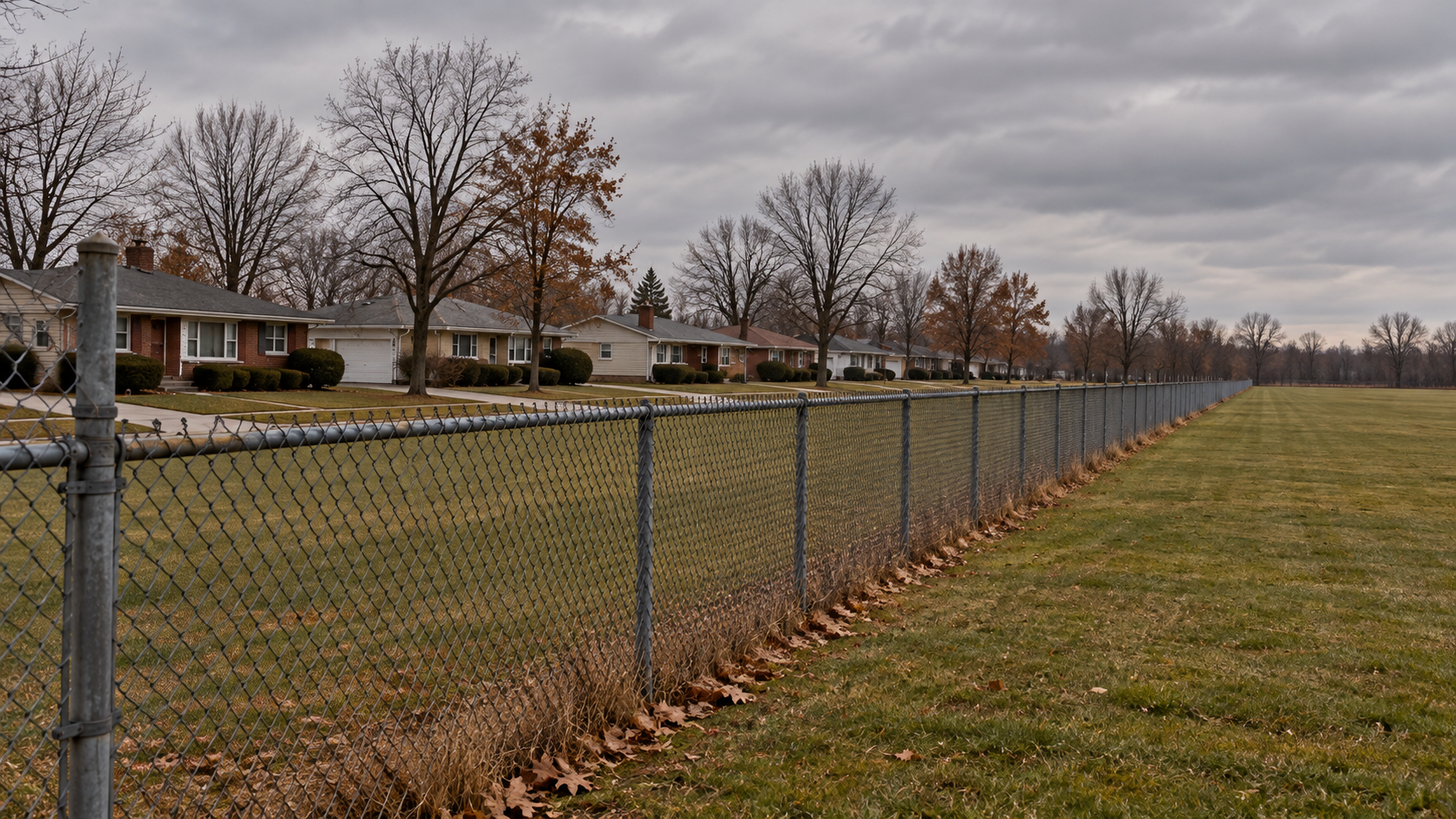
In the 1890s, a developer named William T. Love dreamed of a model industrial city near Niagara Falls, powered by a canal he would dig to carry water for electricity. The money ran out. Only about a mile of the canal was ever dug, and his name stayed on a long, empty ditch. From 1942 to 1952, Hooker Chemical used the ditch as a dump, with the city’s permission. About 21,800 tons of chemical waste went into the ground, and the canal was covered over with clay. In 1953, Hooker sold the land to the Niagara Falls school board for $1. The deed included a clause releasing the company from future claims. Despite warnings about buried drums, the 99th Street School opened on the site in 1955, and in the late 1950s homes went up around it. Sewer lines and the LaSalle Expressway were built through the area, breaking the clay cap. Over the years, chemicals seeped into yards and basements. Residents, led in part by Lois Gibbs and the Love Canal Homeowners’ Association, pushed for answers. On August 7, 1978, President Jimmy Carter declared a federal health emergency, the first time emergency funds had been used for something other than a natural disaster. Hundreds of families were relocated. Love Canal became a national story, and the EPA says public concern there was a catalyst for the 1980 Superfund law. Love Canal was the first site on the program’s priority list. The school was torn down, the canal was capped and fenced, and the cleanup took 21 years and about $400 million. In 1995, Occidental Petroleum, which had bought Hooker in 1968, agreed to pay $129 million. The site was removed from the Superfund list in 2004.
Last corrected: Oct 8, 2026.
Grew up near here?
Get the free New York guide: every Hidden Current place in the region, with what you can still see and how to get there.
State guides are coming soon. Email signup is not available yet.
Watch the short documentary
Love Canal: The Neighborhood Built on Toxic Waste, New York
Claim log
| # | Claim | Sources | Status |
|---|---|---|---|
| 1 | Love Canal is in Niagara Falls, New York, at about 43°04′50″N, 78°56′56″W. |
| Sourced |
| 2 | William T. Love began digging a canal in 1894 for a planned "Model City." |
| Sourced |
| 3 | Only about one mile of the canal was dug. |
| Sourced |
| 4 | Hooker Chemical used the canal as a chemical dump with the city's permission from 1942 to 1952. |
| Sourced |
| 5 | About 21,800 short tons of waste were dumped. |
| Sourced |
| 6 | 22,000 tons of chemical wastes buried 30 years earlier began to seep into backyards and basements. |
| Sourced |
| 7 | Hooker sold the site to the Niagara Falls school board for $1 in 1953. |
| Sourced |
| 8 | The deed included a clause releasing the company from future claims. |
| Sourced |
| 9 | The 99th Street School was built on the site despite warnings about buried drums and opened in 1955. |
| Sourced |
| 10 | Homes were built nearby in the late 1950s. |
| Sourced |
| 11 | Sewer work and the LaSalle Expressway breached the clay cap. |
| Sourced |
| 12 | Lois Gibbs led the Love Canal Homeowners' Association. |
| Sourced |
| 13 | President Carter declared a federal health emergency on August 7, 1978. |
| Sourced |
| 14 | It was the first time emergency funds were used for a non-natural-disaster situation. |
| Sourced |
| 15 | About 800 families were relocated. |
| Sourced |
| 16 | Love Canal was the first hazardous waste site to gain national notoriety. |
| Sourced |
| 17 | Public perception about Love Canal served as a catalyst for CERCLA, or Superfund. |
| Sourced |
| 18 | The Superfund program was established in 1980. |
| Sourced |
| 19 | Love Canal was the first site on the National Priorities List. |
| Sourced |
| 20 | The cleanup took 21 years and cost about $400 million. |
| Sourced |
| 21 | Occidental Petroleum, which acquired Hooker in 1968, agreed to pay $129 million in 1995. |
| Sourced |
| 22 | The site was removed from the Superfund list on September 30, 2004. |
| Sourced |
| 23 | About 260 north-side homes were renovated and resold starting in 1990. |
| Sourced |
| 24 | The canal was capped with plastic liner, clay, and topsoil and fenced off. |
| Sourced |
Disagreements logged
No approved disagreements are logged on this page yet.
Submit a disagreement
Disagree with a fact in this story? Submit a source-backed note for editorial review. It stays private until approved and does not automatically become a correction.
Sources
- Wikipedia
- epa.gov
Corrections
| # | Correction | Sources |
|---|---|---|
| 1 | The school was built directly on the dump site, while homes were built nearby rather than on top of it. |
|
| 2 | Waste tonnage is given as 21,800 short tons in one source and 22,000 tons in another. |
|
| 3 | Waste tonnage is given as 21,800 short tons in one source and 22,000 tons in another. |
|
| 4 | The number of families relocated is given as about 800 and, elsewhere, 950 in total. |
|
| 5 | Love Canal was later removed from the Superfund list on September 30, 2004. |
|