
Hidden Beneath CitiesCold WarNike missile sitesSF-88
SF-88: The Cold War Missile Site Hidden in Plain Sight, California
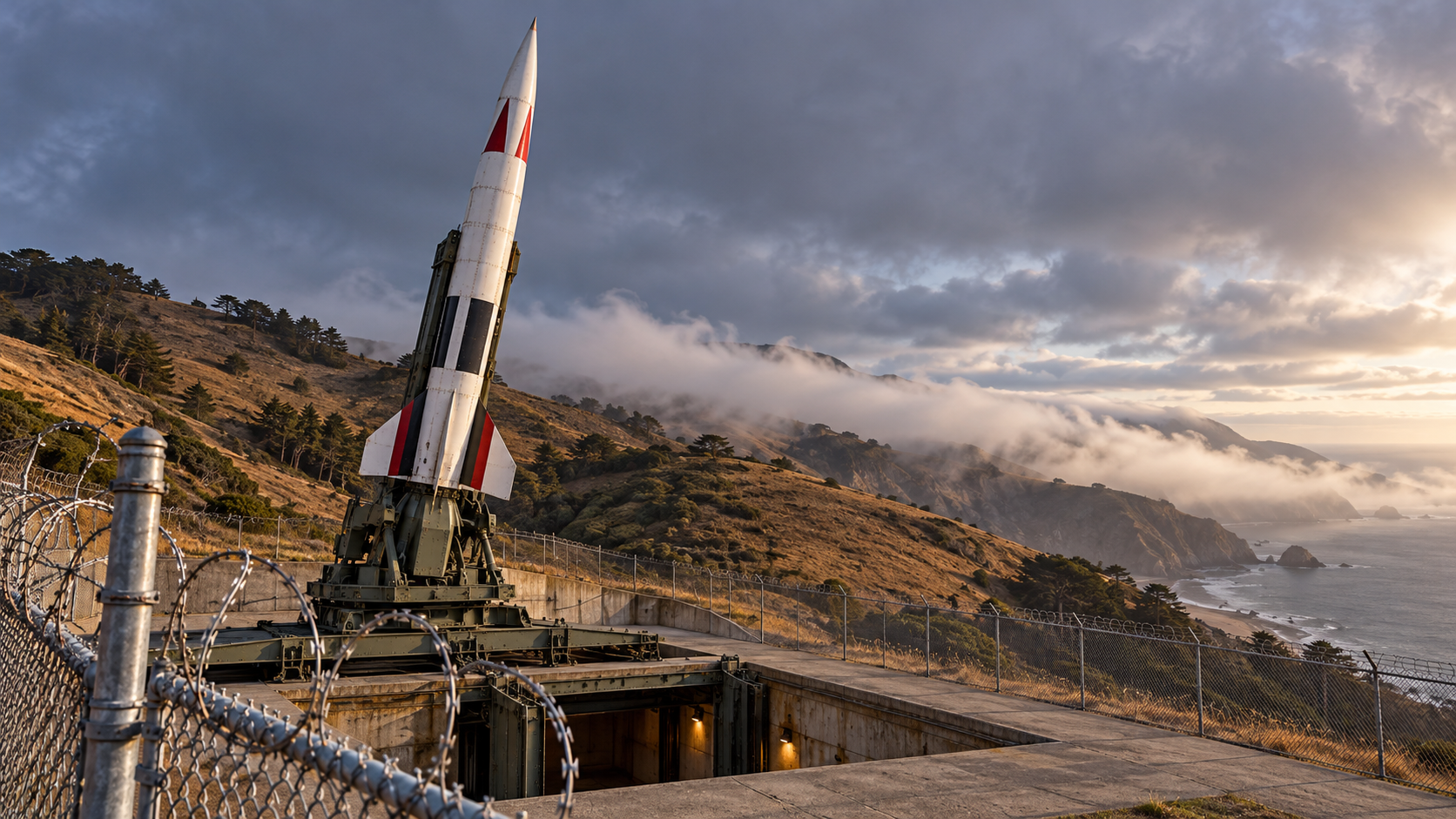
SF-88 in the Marin Headlands is the most fully restored of the close to 300 Nike missile sites the Army built to defend U.S. cities from Soviet bombers.
Every claim sourced
20 claims · 20 sources
0 disagreements logged
6 editorial corrections
Last checked Oct 8, 2026
The story
The numbered claim log below connects facts in this story to their sources.
In the early Cold War, the biggest fear was a Soviet bomber slipping through and dropping an atomic bomb on an American city. The U.S. Army’s answer was Project Nike: rings of missile batteries surrounding major cities and military bases, ready to shoot bombers out of the sky. The first Nike Ajax site went into service at Fort Meade, Maryland, in December 1953. Over the next years the Army built close to 300 sites, each staffed around the clock by a crew of 109 officers and enlisted men. In 1958, the more powerful Nike Hercules arrived. It could carry a W31 nuclear warhead, meant to destroy entire formations of bombers in the air. Each site had two parts: a control area with radars on high ground, and a launch area with missiles stored in underground magazines and raised to the surface by elevator. Many sat on the edges of growing suburbs. The threat changed. Once the Soviet Union built intercontinental ballistic missiles, defenses built to stop bombers mattered less. Budget cuts and the 1972 Anti-Ballistic Missile Treaty finished the job, and nearly every Nike site in the lower 48 was deactivated by April 1974. The sites were handed off and reused as National Guard posts, schools, city yards, parks and even homes. Site SF-88, in the Marin Headlands north of the Golden Gate Bridge, went into service in 1954 and was inactivated in 1974. Under the SALT I arms treaty, it was chosen as the U.S. historical missile site, and the Army transferred it to the National Park Service. In the early 1980s, volunteers began restoring it, starting by pumping water out of the flooded underground magazine. Today it’s the most fully restored Nike site in the country, preserved as it was during operations.
Last corrected: Oct 8, 2026.
Grew up near here?
Get the free California guide: every Hidden Current place in the region, with what you can still see and how to get there.
State guides are coming soon. Email signup is not available yet.
Watch the short documentary
SF-88: The Cold War Missile Site Hidden in Plain Sight, California
Claim log
| # | Claim | Sources | Status |
|---|---|---|---|
| 1 | The U.S. Army built and operated close to 300 Nike sites in the U.S. |
| Sourced |
| 2 | About 265 Nike missile bases remain traceable. |
| Sourced |
| 3 | Nike sites were meant as a last line of defense against Soviet bombers. |
| Sourced |
| 4 | The first Nike Ajax site was at Fort Meade in December 1953. |
| Sourced |
| 5 | The Nike Hercules was first deployed in June 1958. |
| Sourced |
| 6 | The W-31 warhead was used in the Hercules system. |
| Sourced |
| 7 | Each site had a crew of 109 officers and enlisted men. |
| Sourced |
| 8 | Soviet ICBM development reduced the value of Nike as an aircraft defense. |
| Sourced |
| 9 | Budget reductions and the 1972 Anti-Ballistic Missile Treaty followed. |
| Sourced |
| 10 | Almost all continental U.S. sites were deactivated by April 1974. |
| Sourced |
| 11 | Alaska sites closed in 1978 and Florida sites in 1979. |
| Sourced |
| 12 | Former sites now serve as municipal yards, FAA facilities, parks, homes, and other uses. |
| Sourced |
| 13 | SF-88 coordinates are 37°49′37″N 122°31′40″W. |
| Sourced |
| 14 | SF-88 opened in 1954 and was inactivated in 1974. |
| Sourced |
| 15 | SF-88 was armed with Nike Ajax missiles, replaced with Nike Hercules in November 1958. |
| Sourced |
| 16 | SF-88 was chosen as the U.S. historical missile site under SALT I. |
| Sourced |
| 17 | Volunteers began restoration in the early 1980s by pumping water out of the underground missile magazine. |
| Sourced |
| 18 | SF-88 is the most fully restored Nike missile site in the country. |
| Sourced |
| 19 | The site is preserved as it was during operations. |
| Sourced |
| 20 | SF-88 is open on the first Saturday of every month, 12:00–3:00 PM. |
| Sourced |
Disagreements logged
No approved disagreements are logged on this page yet.
Submit a disagreement
Disagree with a fact in this story? Submit a source-backed note for editorial review. It stays private until approved and does not automatically become a correction.
Sources
- nps.gov
- Wikipedia
Corrections
| # | Correction | Sources |
|---|---|---|
| 1 | SF-88 is described as the most fully restored Nike site in the country, not the only restored one. |
|
| 2 | Not all sites closed at once: almost all continental sites were deactivated by April 1974, with Alaska closing in 1978 and Florida in 1979. |
|
| 3 | Many sites were not abandoned but repurposed as National Guard posts, parks, municipal yards, homes, and other uses. |
|
| 4 | The total number of sites is given as close to 300 in one source and about 265 traceable in another. |
|
| 5 | The total number of sites is given as close to 300 in one source and about 265 traceable in another. |
|
| 6 | Visiting hours differ between sources: the NPS lists the first Saturday of each month, 12:00–3:00 PM. |
|
Hidden Current within 100 miles
More Hidden Beneath Cities places
- Underground river beneath a City
- Underground City, Turkey (Derinkuyu Yeraltı Şehri)
- Cold War Military Command Center Inside a Colorado Mountain
- Chicago's Deep Tunnel: 109 Miles of Tunnels That Swallow Storms
- Kincaid's Cave: The Grand Canyon Egyptian Cave That Never Was
- Seattle Underground: The City Buried After the Great Fire of 1889