Forgotten AmericaLiberty BellRevolutionary WarAmerican history
Zion's Reformed Church: The Liberty Bell's Secret Hiding Place, Pennsylvania
In 1777, as the British closed in on Philadelphia, patriots hid the Liberty Bell beneath the floor of Zion's Reformed Church in Allentown for nine months.
Every claim sourced
28 claims · 28 sources
0 disagreements logged
6 editorial corrections
Last checked Oct 4, 2026
The story
The numbered claim log below connects facts in this story to their sources.
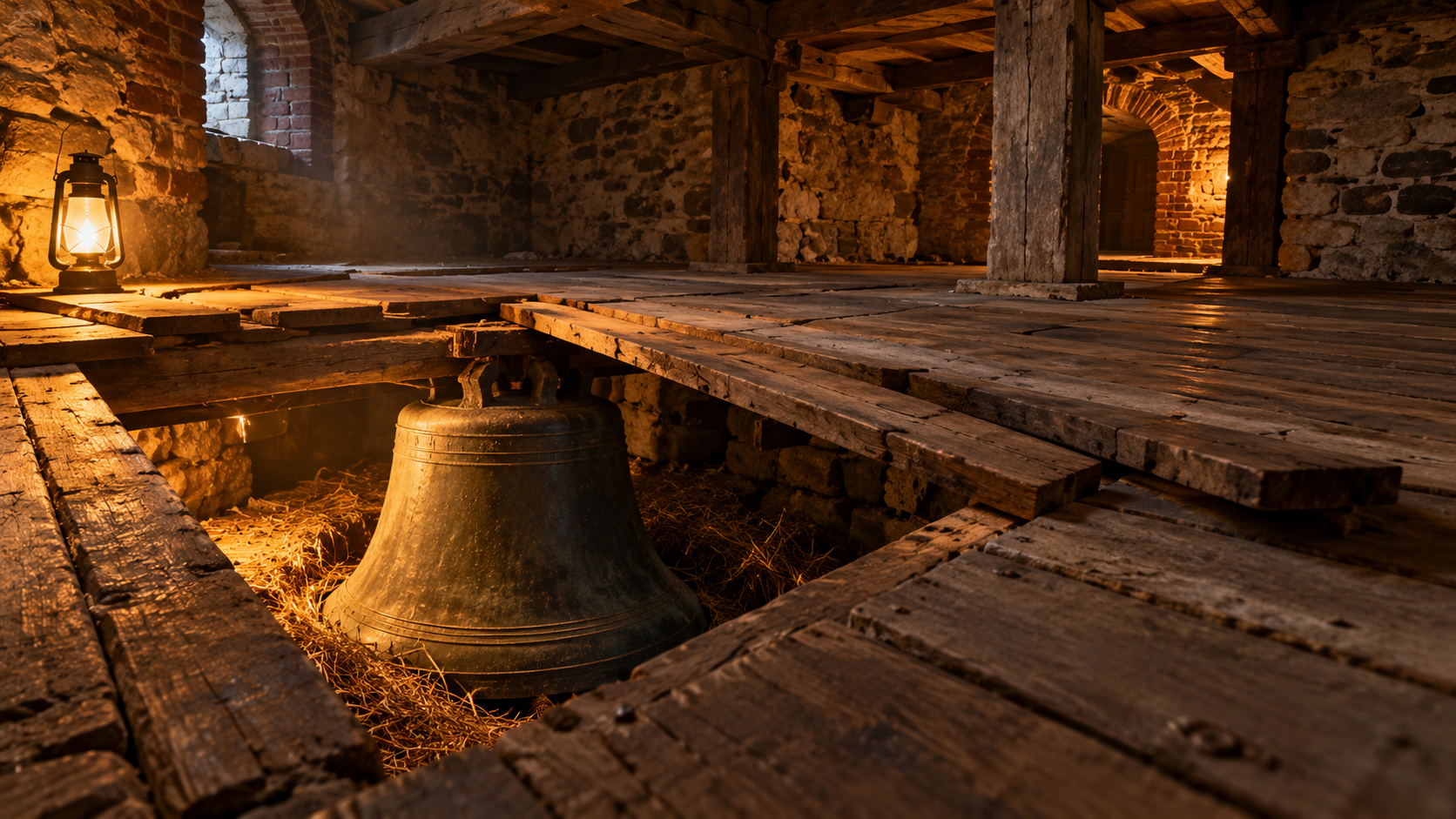
In 1762, German settlers in a brand-new frontier town north of Philadelphia built a small log church. The town was called Northampton Towne then; today it's Allentown. In 1773, the congregation replaced the log church with a simple brick building. Four years later, that church would hide one of the most famous objects in American history. On September 11, 1777, the British defeated George Washington's army at the Battle of Brandywine, leaving Philadelphia nearly defenseless. Patriots feared that if the British captured the city's bells, they would melt them down for cannon or ammunition. So the bells were taken down, including the Pennsylvania State House bell, the one we now call the Liberty Bell, and carted north out of the city. The State House bell was transferred to the wagon of a local farmer, Frederick Leaser, and hidden under a load of hay. In late September 1777, it arrived at Zion's Reformed Church in Northampton Towne. There, the bells were hidden under the church's floorboards. The church's pastor, Abraham Blumer, was reportedly active in the patriot cause. The church served the war effort in another way too. From September 1777 to April 1779, it was used as a military hospital, and soldiers of the Continental Army suffered and died inside it. The British occupied Philadelphia through the winter and spring. In June 1778, they left the city, and the Liberty Bell was taken back to Philadelphia after nine months in hiding. The congregation outgrew the old brick church. In 1838 the building was enlarged, and the 1773 church may have been incorporated into the walls of what is now the boiler room. In the 1880s, the congregation built the larger Gothic Revival church that still stands on Hamilton Street. In 1908, the Daughters of the American Revolution placed a plaque at the church honoring the men who saved the bell, and in 1962 the Liberty Bell Shrine Museum opened in the basement, the area where the bell had been hidden. It displayed a full-size, state-owned replica of the Liberty Bell. In 1983, the church was added to the National Register of Historic Places. In 2022, the shrinking Zion's congregation voted to dissolve. In February 2023, the building was sold to Resurrected Life Community Church, a newer congregation of the same denomination. The museum and the new owners couldn't agree on a lease, and on April 1, 2023, the Liberty Bell Museum closed after more than 60 years. Its collection went to the Lehigh Valley Heritage Museum. The replica bell stayed behind. It's owned by the state, it can't be moved without the state's approval, and it's too big to get out of the church. The real Liberty Bell is back in Philadelphia, and its replica remains in the basement of the church where the original was hidden.
Last corrected: Oct 4, 2026.
Grew up near here?
Get the free Pennsylvania guide: every Hidden Current place in the region, with what you can still see and how to get there.
State guides are coming soon. Email signup is not available yet.
Watch the short documentary
Zion's Reformed Church: The Liberty Bell's Secret Hiding Place, Pennsylvania
Claim log
| # | Claim | Sources | Status |
|---|---|---|---|
| 1 | Historical markers at Zion's Reformed Church are at 40° 36.146′ N, 75° 28.231′ W, at Hamilton Street and Church Street, 622 Hamilton Street, Allentown |
| Sourced |
| 2 | Markers on the church grounds include "Liberty Bell Hiding Place," "The Saving of the Liberty Bell," and "Zion Church Military Hospital" |
| Sourced |
| 3 | Zion Church was used as a military hospital from September 1777 to April 1779 |
| Sourced |
| 4 | The church is located at 622 West Hamilton Street, Allentown, and was added to the National Register of Historic Places on July 28, 1983 (NRHP reference No. 83002259) |
| Sourced |
| 5 | The National Register lists the church at 620 Hamilton St., with significant years 1762, 1886 and 1888 |
| Sourced |
| 6 | The original church was replaced in 1773 with a simple brick structure |
| Sourced |
| 7 | In 1838, when Zion Reformed was enlarged, contractors may have incorporated the 1762 structure into the walls of the boiler room |
| Sourced |
| 8 | Zion's current building is a neo-gothic structure built in the 1880s |
| Sourced |
| 9 | Allentown was then called Northampton Towne |
| Sourced |
| 10 | The Liberty Bell was hidden beneath floor boards in the church for nine months, from September 1777 until the British departed Philadelphia in June 1778 |
| Sourced |
| 11 | The bell was transferred to the wagon of Frederick Leaser, who delivered it on September 24 to Zion Reformed Church |
| Sourced |
| 12 | The Liberty Bell arrived at the church early on the morning of September 25 |
| Sourced |
| 13 | Accounts differ on the roles of Frederick Leaser and Jacob Mickley in transporting the bell |
| Sourced |
| 14 | On November 19, 1908, the Daughters of the American Revolution unveiled the Saving of the Liberty Bell Plaque at Zion Reformed Church |
| Sourced |
| 15 | The Battle of Brandywine took place September 11, 1777 |
| Sourced |
| 16 | It was feared the British might melt down the Liberty Bell to make cannons or ammunition |
| Sourced |
| 17 | The bell was loaded into a wagon and disguised as hay bales, headed for Allentown |
| Sourced |
| 18 | Pastor Abraham Blumer of Zion's church was apparently very active in the cause |
| Sourced |
| 19 | Allentown was founded by William Allen in 1762 |
| Sourced |
| 20 | The Liberty Bell Shrine Museum opened in 1962 beneath the floorboards of Zion's Reformed Church |
| Sourced |
| 21 | The museum's collections were transferred to the Lehigh Valley Heritage Museum, which created a new exhibition, The American Revolution |
| Sourced |
| 22 | The replica Liberty Bell remains at Zion's Reformed United Church of Christ |
| Sourced |
| 23 | The museum and the church could not agree on a new lease, and the museum permanently closed on April 1, 2023 |
| Sourced |
| 24 | In February 2023, the building was sold to Resurrected Life Community Church, part of the United Church of Christ |
| Sourced |
| 25 | The remaining members of Zion's United Church of Christ voted to dissolve |
| Sourced |
| 26 | The replica bell is owned by the state, can't be moved without its approval, and is too big to get out of the church |
| Sourced |
| 27 | Resurrected Life Community Church seems to have no plans to make the replica publicly accessible |
| Sourced |
| 28 | The Liberty Bell replica is owned by the state and can't be moved out of the church without state approval |
| Sourced |
Disagreements logged
No approved disagreements are logged on this page yet.
Submit a disagreement
Disagree with a fact in this story? Submit a source-backed note for editorial review. It stays private until approved and does not automatically become a correction.
Sources
- Historical Marker Database
- Wikipedia
- National Park Service
- rcus.org
- discoverlehighvalley.com
- WFMZ
- Lehigh County Historical Society
- tomlovesthelibertybell.com
- Lehigh Valley News
Corrections
| # | Correction | Sources |
|---|---|---|
| 1 | The church standing today is not the building where the bell was hidden; the 1773 brick church was enlarged in 1838 and replaced by a neo-gothic building in the 1880s |
|
| 2 | The Liberty Bell Museum is no longer open; it permanently closed on April 1, 2023 |
|
| 3 | The bell was hidden under the church floorboards; the "hay and manure" and "700 wagons" details come from a single secondary source |
|
| 4 | The bell's wagon was disguised with hay, according to local historians |
|
| 5 | Sources disagree on the bell's arrival date, September 24 or September 25, 1777 |
|
| 6 | Sources disagree on the bell's arrival date, September 24 or September 25, 1777 |
|